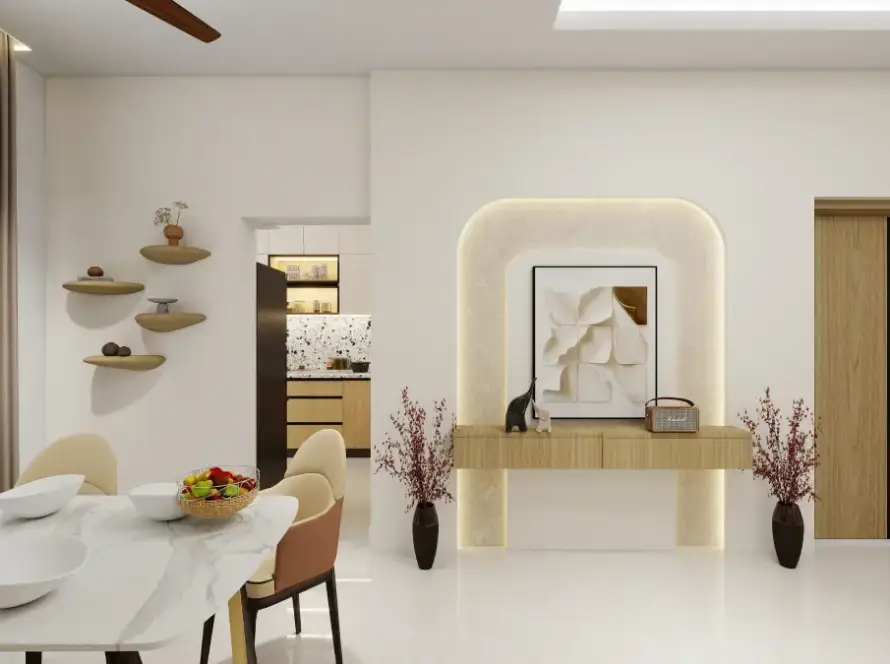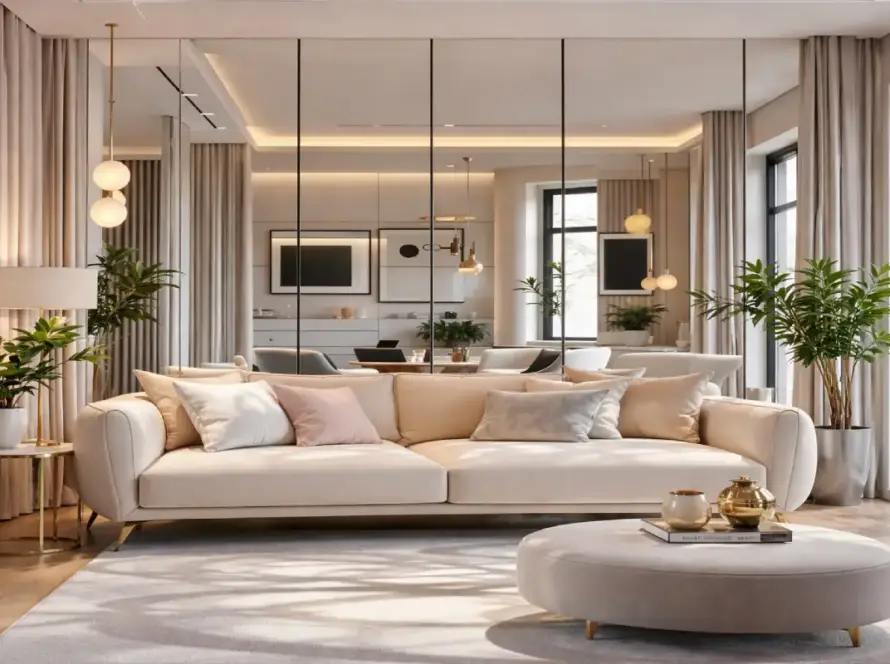
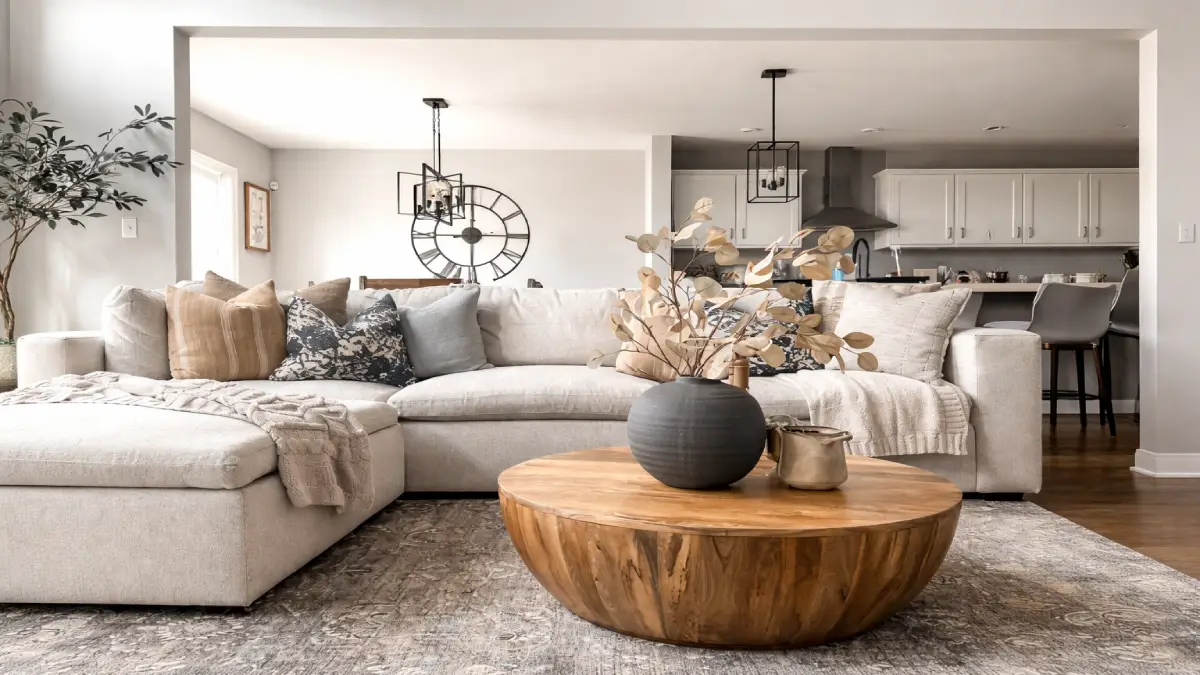
Wall decor can elevate a space – or completely overwhelm it. The real art of interior design lies not in adding more elements, but in achieving balance. When wall decor, furniture, and lighting work together harmoniously, a room feels intentional, polished, and visually comfortable.
In modern Indian homes – especially apartments in Bangalore – achieving this balance is essential due to limited space and open-plan layouts. Here’s a complete interior-focused guide to help you balance wall decor with furniture and lighting like a professional designer.
Learning how to balance wall decor with furniture and lighting ensures your interiors feel cohesive rather than cluttered.
Why Balance Matters in Interior Design
Balance creates visual stability. Without it, a room can feel:
- Cluttered
- Heavy on one side
- Dim or harshly lit
- Visually disconnected
Good interior styling ensures that walls, furniture, and lighting complement each other rather than compete for attention.
Step 1: Start With Furniture as the Anchor
Furniture is the foundation of any room. Wall decor should support it — not overpower it.
i. Consider Scale & Proportion
A common mistake is hanging small artwork above a large sofa or oversized art above a compact console.
Golden Rule:
Wall decor should occupy around 60–75% of the furniture width below it.
Example:
- 3-seater sofa → Large artwork or gallery cluster
- Slim console table → Medium-sized framed piece
Proper proportion maintains harmony.
ii. Align Wall Decor With Furniture Placement
Wall art should visually “connect” to the furniture.
- Center artwork above the sofa
- Align frames with headboard width
- Keep a 6–8 inches gap between furniture and art
This creates cohesion rather than floating decor.
Step 2: Understand Visual Weight
Balance isn’t about symmetry only — it’s about visual weight.
Visual weight depends on:
- Color intensity
- Texture
- Size
- Lighting
- Material finish
For example:
- Dark artwork feels heavier
- Textured wall panels carry more weight
- Large mirrors create visual expansion
If one wall has bold wallpaper, balance it with simpler furniture.
Step 3: Coordinate Lighting With Wall Decor
Lighting can enhance or ruin your wall decor.
Types of Lighting That Influence Wall Styling
i. Ambient Lighting
Overall room lighting – ceiling lights, cove lights.
ii. Task Lighting
Reading lamps, pendant lights, desk lamps.
iii. Accent Lighting
Wall sconces, picture lights, and LED strips.
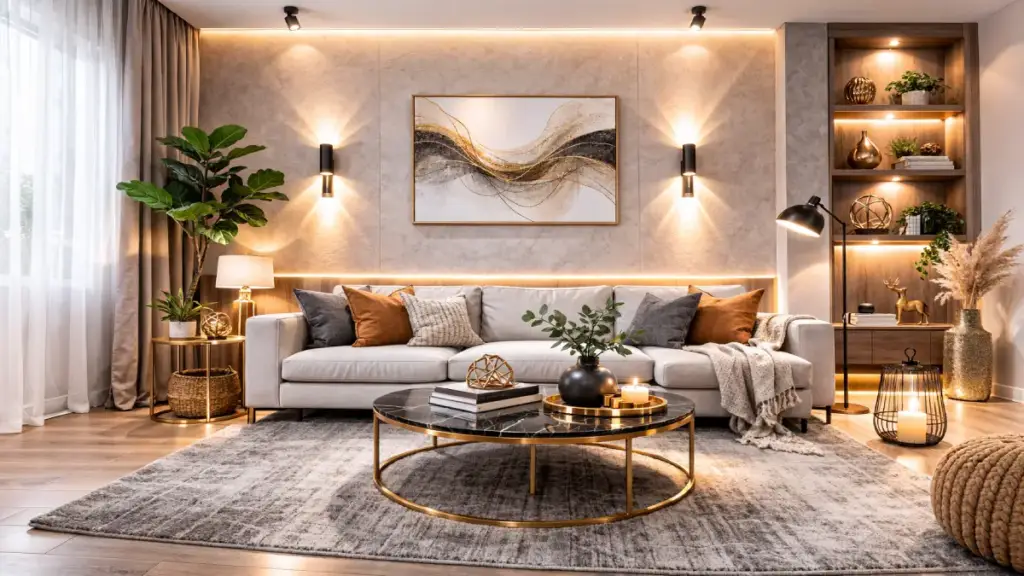
Accent lighting is crucial for highlighting wall decor.
How to Use Lighting to Balance Decor
- Install picture lights above the artwork
- Use wall sconces beside mirrors
- Add LED backlighting behind panels
- Avoid harsh direct spotlight glare
Soft, warm lighting enhances textures and artwork colors.
Step 4: Choose the Right Wall Decor Type
Different wall decor types require different balance strategies.
Framed Artwork & Gallery Walls
Best for:
- Living rooms
- Dining areas
- Bedrooms
Balance Tips:
- Keep spacing consistent
- Stick to one color palette
- Avoid mixing too many frame styles
If furniture is neutral, artwork can add color.
If furniture is bold, choose subtle artwork.
Mirrors
Mirrors are powerful balancing tools.
They:
- Reflect light
- Expand visual space
- Reduce heaviness
Place mirrors opposite windows or near light sources for maximum effect.
Textured Panels & Wall Treatments
Wall cladding, fluted panels, wallpaper, or stone finishes add depth.
Balance by:
- Keeping furniture minimal
- Choosing soft fabrics
- Avoiding heavy patterns nearby
Textured walls already carry strong visual weight.
Step 5: Maintain Color Harmony
Wall decor must align with:
- Sofa upholstery
- Curtains
- Rug tones
- Accent cushions
Use the 60-30-10 rule:
- 60% dominant color
- 30% secondary
- 10% accent
Wall decor often contributes to the accent portion.
Step 6: Avoid Overcrowding Walls
In Indian homes, especially apartments, overcrowding is common.
Avoid:
- Too many photo frames
- Multiple wall clocks
- Excessive wall shelves
- Mixing wallpaper + panels + artwork together
Empty space is part of design.
Negative space enhances elegance.
Step 7: Consider Room Size & Ceiling Height
Small Rooms
- Use vertical artwork
- Use mirrors
- Keep frames light
Large Rooms
- Use oversized statement art
- Combine wall panels + lighting
- Consider layered wall decor
High ceilings allow taller decor arrangements.
Step 8: Balance Symmetry & Asymmetry
Symmetrical Styling:
- Two wall sconces + centered artwork
- Identical side tables + frames
Asymmetrical Styling:
- Large art on one side
- Floor lamp balancing opposite side
Both work – but must feel intentional.
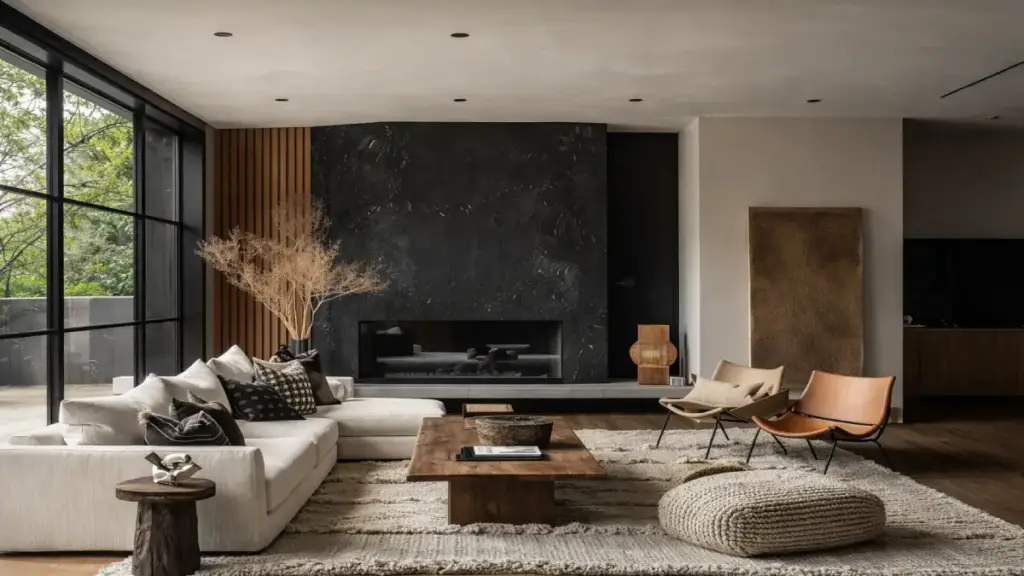
Step 9: Coordinate With Functional Zones
In open-plan apartments:
- Living area wall decor should align with the TV unit design
- Dining wall art should relate to the lighting above the table
- The bedroom headboard wall should complement the bedside lamps
Wall decor should not clash between zones.
Step 10: Use 3D Visualization Before Finalizing
Professional designers use 3D visualization to:
- Check artwork scale
- Test lighting effects
- Compare material finishes
- Avoid costly installation mistakes
This is especially useful in Bangalore apartments where space planning precision matters.
Common Mistakes to Avoid
- Hanging art too high
- Ignoring lighting temperature
- Over-matching everything
- Using decor that doesn’t match the furniture style
- Choosing random statement pieces
Interior balance is about intention.
Modern Interior Styling Trends in India
Current trends include:
- Oversized minimal art
- Fluted wall panels with soft LED
- Matte-finish textured paint
- Neutral furniture with a bold accent wall
- Sculptural wall lighting
These trends work well when carefully balanced.
Real-Life Styling Examples From Modern Indian Homes
Balancing wall decor with furniture and lighting becomes easier when you look at practical applications. Here are real-life examples commonly seen in contemporary Bangalore apartments:
Living Room With Large Sectional Sofa
A neutral L-shaped sofa paired with one oversized abstract artwork works better than multiple small frames. Two slim wall sconces placed symmetrically on either side of the artwork create visual stability. The lighting softens the wall texture while the furniture anchors the composition.
Bedroom Headboard Wall Styling
Instead of cluttering the headboard wall with shelves and frames, many designers now use a single wide canvas aligned with the bed width. Matching bedside lamps provide balanced vertical lighting, preventing the wall decor from feeling isolated.
Dining Area Accent Wall
In compact apartments, a textured wallpaper or fluted panel behind the dining table is often balanced with a minimal pendant light centered above the table. Keeping furniture simple allows the wall finish to stand out without overwhelming the room.
These examples show that balance is not about adding more elements — it is about strategic placement and proportion.
Frequently Asked Questions
How high should wall art be placed above furniture?
Wall art should typically be placed 6 to 8 inches above furniture. The center of the artwork should align roughly at eye level (around 57–60 inches from the floor) for balanced visual proportion.
Should wall lighting match the furniture style?
Yes. Lighting fixtures should complement the overall interior style. Modern furniture pairs best with sleek sconces or minimal pendant lights, while traditional furniture works better with warm-toned decorative fixtures.
How do you avoid overcrowding wall decor?
Stick to one focal element per wall. Avoid mixing wallpaper, heavy panels, mirrors, and multiple frames on the same surface. Allow negative space to maintain visual breathing room.
Final Thoughts
Balancing wall decor with furniture and lighting is not about filling walls – it’s about creating harmony.
When scale, proportion, color, texture, and lighting align, your interiors feel complete and professionally designed.
In compact urban homes – especially in Bangalore – thoughtful wall styling can transform ordinary rooms into curated, elegant spaces.
The key is balance, restraint, and coordination.
Ultimately, learning how to balance wall decor with furniture and lighting will elevate your entire interior styling approach.