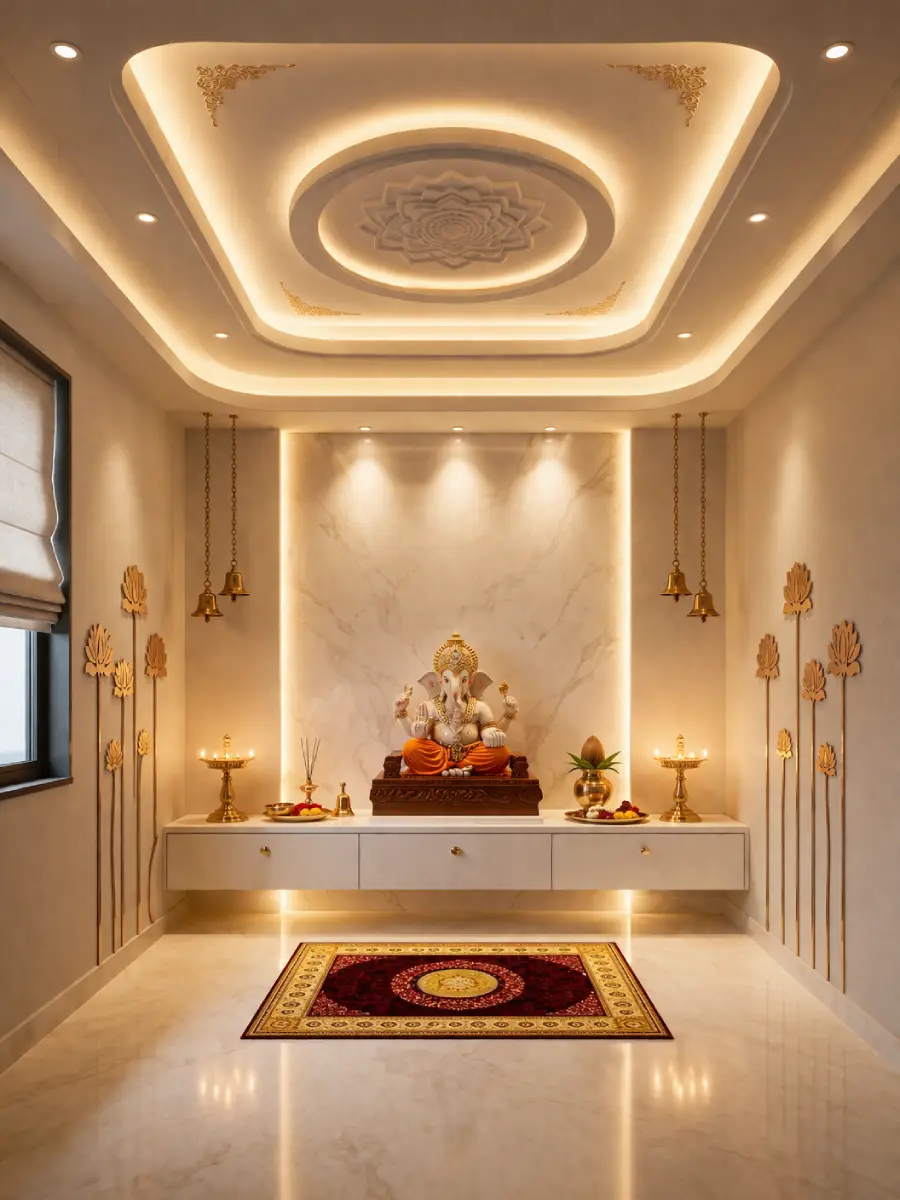
A pooja room is one of the most sacred spaces in an Indian home. It is not only a place for prayer but also a space that reflects spirituality, peace, and positive energy. While the mandir unit and decor often receive attention, the false ceiling design in a pooja room plays an equally important role in enhancing the spiritual ambiance.
A traditional pooja room false ceiling design enhances the spiritual ambiance while adding elegance and depth to the prayer space.
A thoughtfully designed traditional pooja room false ceiling can add depth, warmth, and architectural beauty to the prayer area. From carved wooden ceiling panels to decorative POP patterns with soft lighting, traditional ceiling designs can create a serene and divine atmosphere.
Modern homeowners are now combining traditional temple aesthetics with contemporary false ceiling techniques to create pooja rooms that feel both sacred and visually elegant.
In this guide, we explore traditional pooja room false ceiling design ideas, lighting concepts, materials, and expert styling tips to help you create a peaceful prayer space at home.
Why False Ceiling Design is Important in a Pooja Room
The ceiling of a pooja room contributes significantly to the overall spiritual atmosphere. A well-designed ceiling enhances the sacred feeling of the space and complements the temple décor.
Benefits of False Ceilings in Pooja Rooms
Creates a divine focal point
Decorative ceilings highlight the mandir area and make it visually special.
Enhances lighting ambiance
Soft lighting integrated into the ceiling creates a calm and peaceful environment.
Adds architectural beauty
Traditional patterns and carvings bring temple-like aesthetics into modern homes.
Conceals wiring and fixtures
False ceilings allow hidden lighting and electrical wiring.
Because of these advantages, false ceilings are widely used in modern pooja room interior design.
Popular Traditional Pooja Room False Ceiling Designs
There are several traditional ceiling styles inspired by temple architecture and Indian design elements.
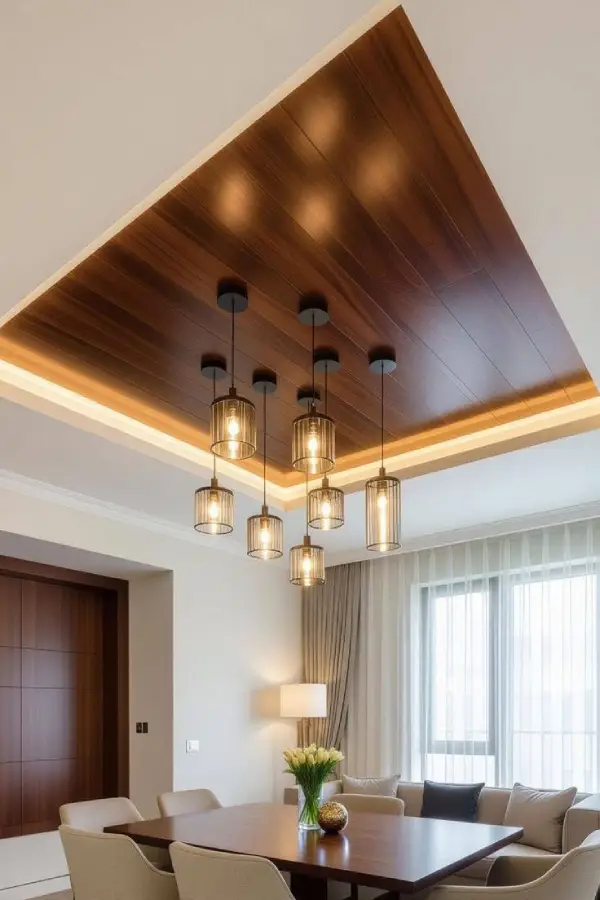
1. Wooden Panel False Ceiling
Wooden ceilings are one of the most popular choices for traditional pooja rooms. Natural wood adds warmth and a temple-like feel to the space.
Design Features
- Wooden panel ceiling with carved borders
- Traditional lattice or grid patterns
- Warm lighting integrated within the panels
Wooden ceilings pair beautifully with wooden mandir units and carved temple doors.
2. POP Ceiling with Traditional Patterns
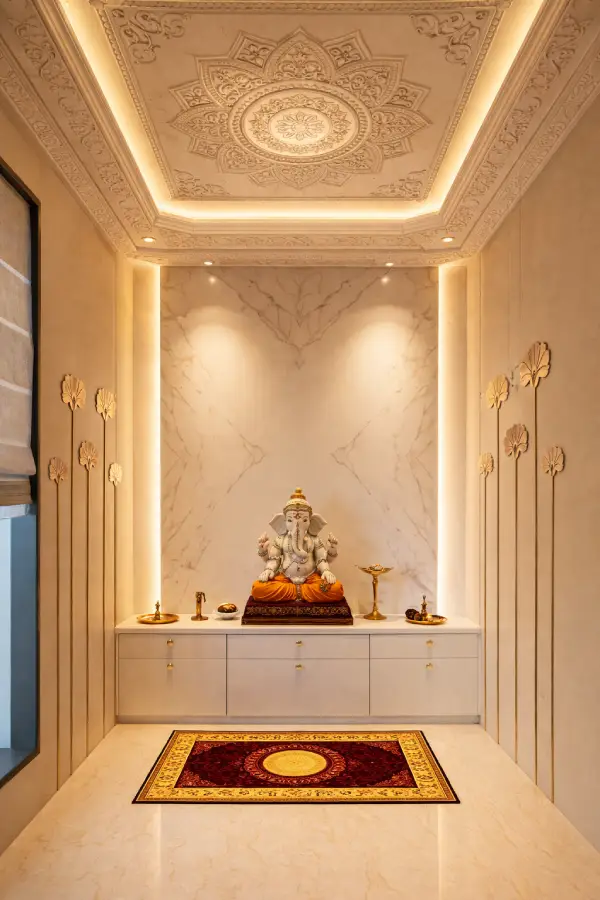
Plaster of Paris (POP) ceilings allow detailed decorative patterns that suit traditional interiors.
Design Ideas
- Lotus or mandala ceiling designs
- Circular decorative ceiling motifs
- Ornamental borders around the ceiling
These designs create a visually rich ceiling that enhances the sacred atmosphere.
3. Dome-Shaped Temple Ceiling
Inspired by traditional temple architecture, dome-shaped ceilings are a beautiful addition to pooja rooms.
Benefits
- Creates a grand and spiritual look
- Draws attention to the center of the mandir
- Works well with hanging lamps or chandeliers
This design is commonly used in large pooja rooms or dedicated prayer spaces.
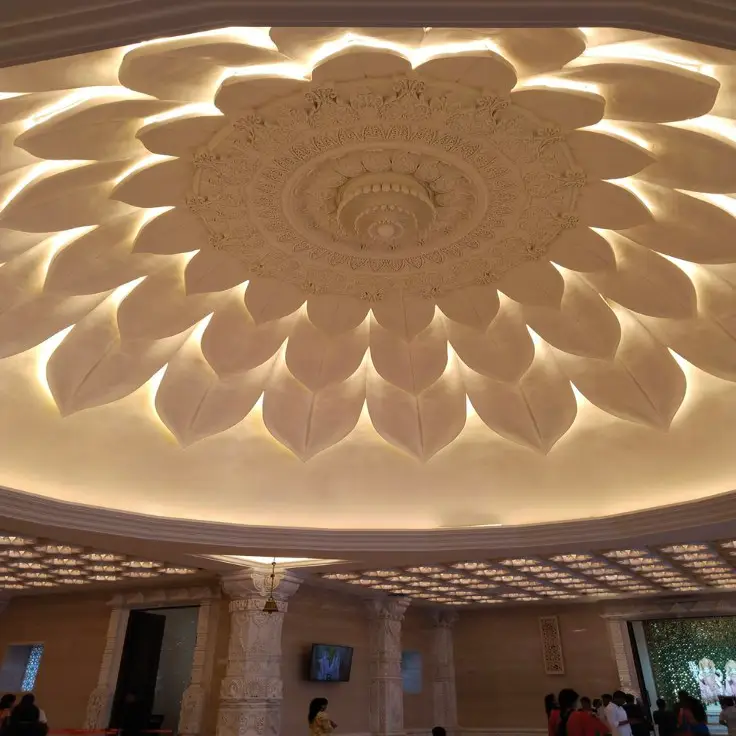
4. Backlit Ceiling Design for Pooja Rooms
Lighting plays a crucial role in spiritual spaces. Backlit ceilings create a soft divine glow.
Lighting Options
- Warm LED strip lighting
- Hidden cove lighting
- Backlit lotus or mandala panels
This lighting style creates a calm and meditative environment.
5. Wooden Beam Ceiling
Wooden beams add a rustic and traditional charm to pooja rooms.
Ideal for
- Traditional Indian interiors
- Temple-style mandir rooms
- Homes with wooden décor themes
Beam ceilings combined with warm lighting create a timeless traditional look.
Lighting Ideas for Traditional Pooja Room Ceilings
Lighting is essential for enhancing the spiritual atmosphere of the prayer room.
Warm Ambient Lighting
Warm lighting creates a peaceful and calming environment for prayer.
Hanging Temple Lamps
Brass or copper hanging lamps add a traditional temple-like feel.
LED Backlighting
Hidden lighting around the ceiling highlights decorative patterns.
Combining these lighting elements ensures the pooja room feels serene and sacred.
Traditional Materials Used in Pooja Room Ceilings
The materials used for pooja room ceilings should complement traditional design aesthetics.
Wood
Wood adds warmth and authenticity to traditional interiors.
POP (Plaster of Paris)
POP is ideal for decorative ceiling patterns and motifs.
Gypsum Board
Gypsum ceilings are smooth and suitable for modern temple designs.
Decorative Panels
Carved MDF or decorative panels can add artistic details.
Using natural materials helps create a temple-inspired interior environment.
Ceiling Design Tips for Small Pooja Rooms
Many modern homes have compact pooja areas, especially in apartments.
Design Tips
- Choose simple POP ceilings with soft lighting
- Avoid heavy multi-layer designs
- Use light colors like white or cream
- Install a single decorative ceiling element above the mandir
Minimal designs ensure the pooja space feels calm and uncluttered.
Traditional Ceiling Color Ideas for Pooja Rooms
Color plays an important role in spiritual design.
White and Off-White
Symbolizes purity and creates a peaceful environment.
Golden Accents
Gold details add a traditional temple-like elegance.
Warm Beige or Cream
Creates a soft and calm ambiance.
Bright or dark ceiling colors are usually avoided in pooja rooms to maintain spiritual simplicity.
Traditional Pooja Room Ceiling Trends
Interior design trends are evolving, but traditional aesthetics remain timeless in prayer spaces.
Current Design Trends
- Lotus motif ceiling designs
- Wooden panel ceilings with warm lighting
- Temple-style dome ceilings
- LED backlit decorative panels
- Minimal POP ceilings with subtle borders
These designs combine traditional spirituality with modern interior techniques.
Maintenance Tips for Pooja Room False Ceilings
Proper maintenance helps preserve the beauty of the prayer space.
Maintenance Tips
- Clean ceilings regularly with a soft cloth
- Avoid moisture exposure
- Use high-quality materials during installation
- Ensure proper electrical safety for lighting fixtures
Regular care ensures your pooja room remains peaceful and visually elegant.
FAQs: Traditional Pooja Room False Ceiling Design
Which ceiling design is best for pooja rooms?
Wooden panel ceilings and decorative POP ceilings are among the most popular traditional choices.
What lighting is suitable for pooja room ceilings?
Warm LED lighting and temple-style hanging lamps work best for prayer spaces.
Can small pooja rooms have false ceilings?
Yes. Simple POP ceilings with soft lighting work well for compact pooja areas.
Are wooden ceilings good for pooja rooms?
Yes. Wooden ceilings create a warm and traditional temple-like ambiance.
Final Thoughts
A thoughtfully designed traditional pooja room false ceiling can elevate the spiritual atmosphere of your home. By combining traditional patterns, natural materials, and soft lighting, homeowners can create a sacred space that feels peaceful and divine.
Whether you prefer a wooden temple ceiling, decorative POP patterns, or a backlit lotus design, the right ceiling concept can enhance the beauty and serenity of your pooja room.
When carefully designed, a traditional ceiling transforms the prayer area into a calm sanctuary that reflects devotion, culture, and timeless Indian design aesthetics.