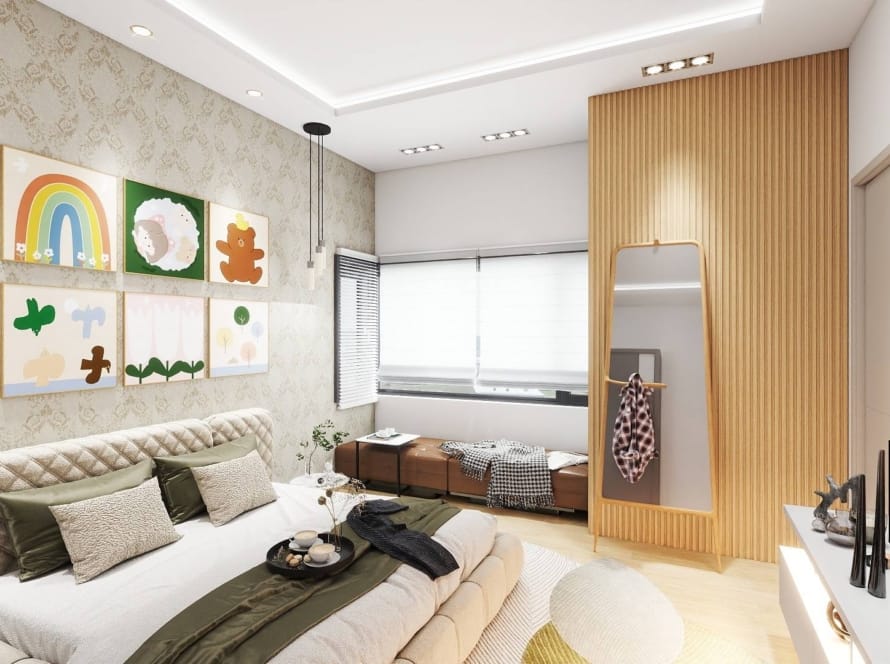
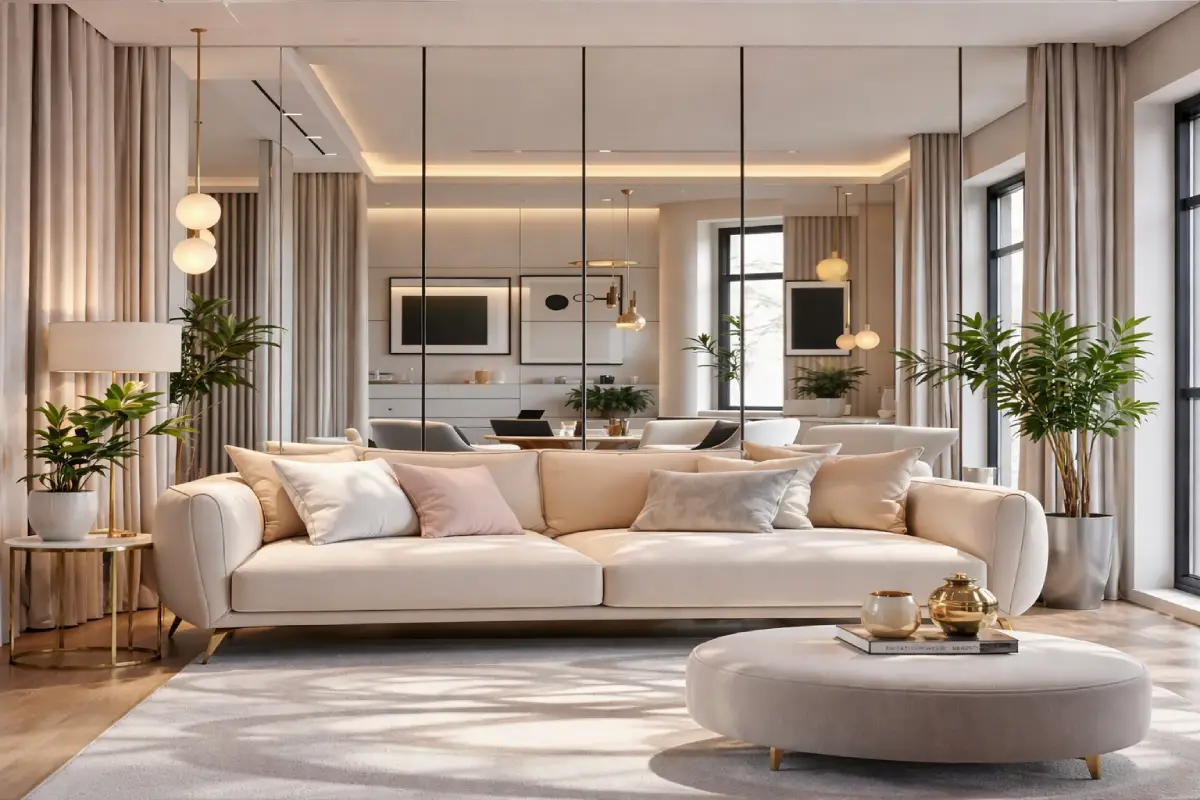
Small homes can feel stylish, functional, and spacious – if lighting is planned correctly. ✨ Many homeowners focus only on furniture layout and colour schemes, but lighting design plays an equally powerful role in shaping how large or compact a space feels.
If you live in a 1BHK, 2BHK apartment, studio flat, or compact urban home, understanding how to use lighting to make small homes look bigger can completely transform your interiors without major renovation.
This guide covers smart lighting strategies, design tips, and expert recommendations to visually expand your space while keeping it elegant and practical.
Choosing the right lighting to make small homes look bigger can completely transform compact interiors without structural renovation.
Why Lighting Is Crucial in Small Home Design
Lighting directly affects:
- Depth perception
- Shadow formation
- Room brightness
- Ceiling height appearance
- Visual openness
Poor lighting creates dark corners, heavy shadows, and a cramped feeling. Proper lighting, on the other hand, removes visual boundaries and makes even small homes feel airy and welcoming.
In compact apartments – especially in cities like Bangalore – strategic lighting design can significantly enhance perceived space.
1️. Maximize Natural Light First
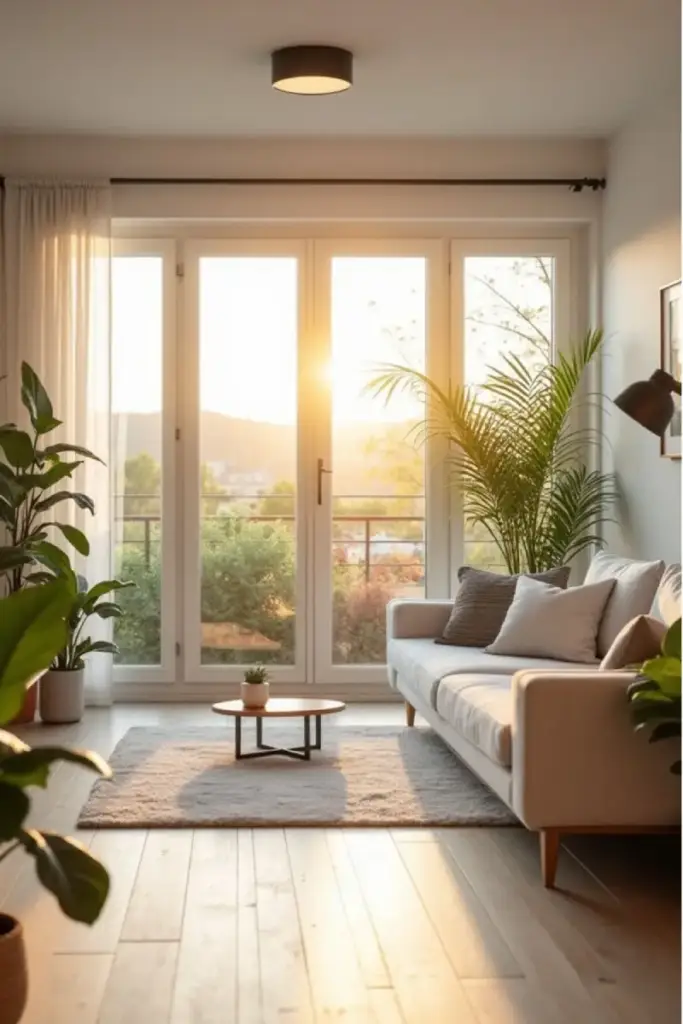
Before adding artificial lighting, optimize natural daylight. ☀️
According to the Bureau of Energy Efficiency (BEE), improving daylight usage in residential buildings helps reduce dependence on artificial lighting and lowers overall energy consumption.
Tips to Increase Natural Light:
- Use sheer curtains instead of heavy drapes
- Keep window areas clutter-free
- Install mirrors opposite windows
- Choose light-coloured wall paint
- Use glass partitions instead of solid walls
Natural light makes small rooms look larger by reducing shadow zones and brightening the entire space evenly.
2️. Use Layered Lighting (Not Just One Ceiling Light)
One common mistake in small homes is relying on a single ceiling light.
Instead, use layered lighting, which includes:
✔ Ambient Lighting
General lighting that evenly illuminates the room (recessed lights, ceiling fixtures).
✔ Task Lighting
Focused lighting for specific activities (desk lamps, kitchen under-cabinet lights).
✔ Accent Lighting
Highlights features like artwork, textured walls, or shelves.
Layering light reduces harsh shadows and creates depth – making rooms appear bigger and more structured.
3️. Choose Recessed and Flush-Mount Fixtures
In small homes, bulky hanging lights can visually lower the ceiling.
Better alternatives:
- Recessed ceiling lights
- Slim LED panels
- Flush-mount fixtures
- Cove lighting
These fixtures maintain a clean ceiling line, helping the room feel taller and more open.
4️. Use Wall Wash Lighting to Add Depth
Wall washing is one of the best lighting tricks to make small spaces feel larger.
Wall-mounted lights or concealed LED strips directed toward walls:
- Eliminate dark corners
- Create soft brightness
- Highlight textures
- Add dimension
Bright walls visually push outward, making the room feel more expansive.
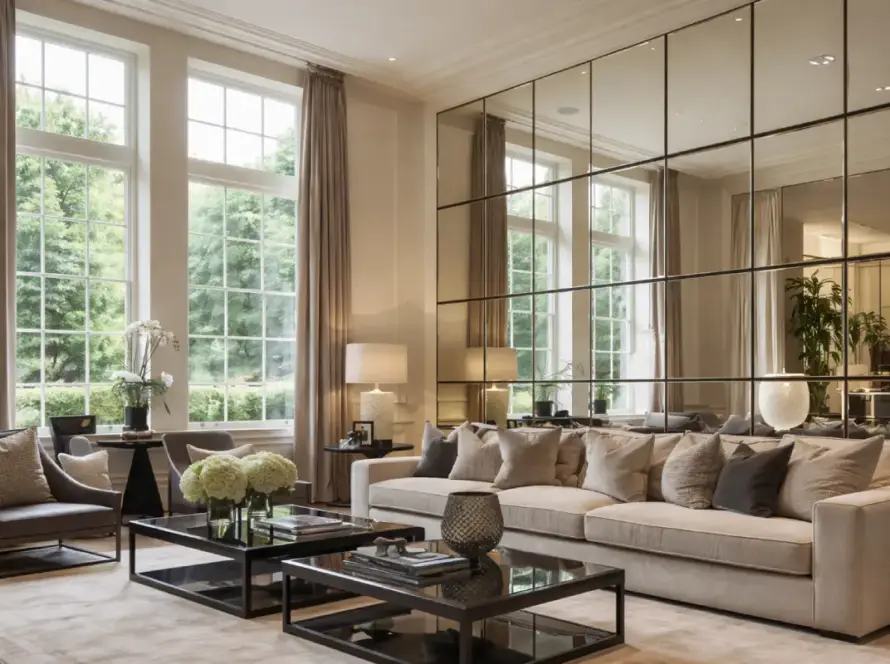
5️. Install Mirrors with Strategic Lighting
Mirrors double the perception of space – especially when combined with proper lighting.
How to Use Mirrors Effectively:
- Place mirrors opposite windows
- Add LED strips behind mirrors
- Use mirrored wardrobe panels
- Combine mirror walls with soft ambient light
Light bouncing off reflective surfaces enhances depth and brightness.
6️. Use Warm, Balanced Light Temperature
Colour temperature matters.
- Warm white (2700K–3000K): Cozy but can feel compact if overused.
- Neutral white (3500K–4000K): Best balance for small homes.
- Cool white (4000K+): Brighter but can feel harsh.
For small apartments, neutral white lighting often works best as it keeps the room bright without making it feel clinical.
7️. Add Vertical Lighting to Increase Ceiling Height
To make ceilings appear higher:
- Install uplights
- Use floor lamps that direct light upward
- Add cove lighting along the ceiling edges
When light flows upward, it visually stretches the height of the room.
8️. Illuminate Dark Corners
Dark corners shrink space perception.
Use:
- Corner floor lamps
- Small wall sconces
- LED strip lighting under shelves
Removing shadows instantly makes the room feel larger.
9️. Use Under-Cabinet and Under-Shelf Lighting
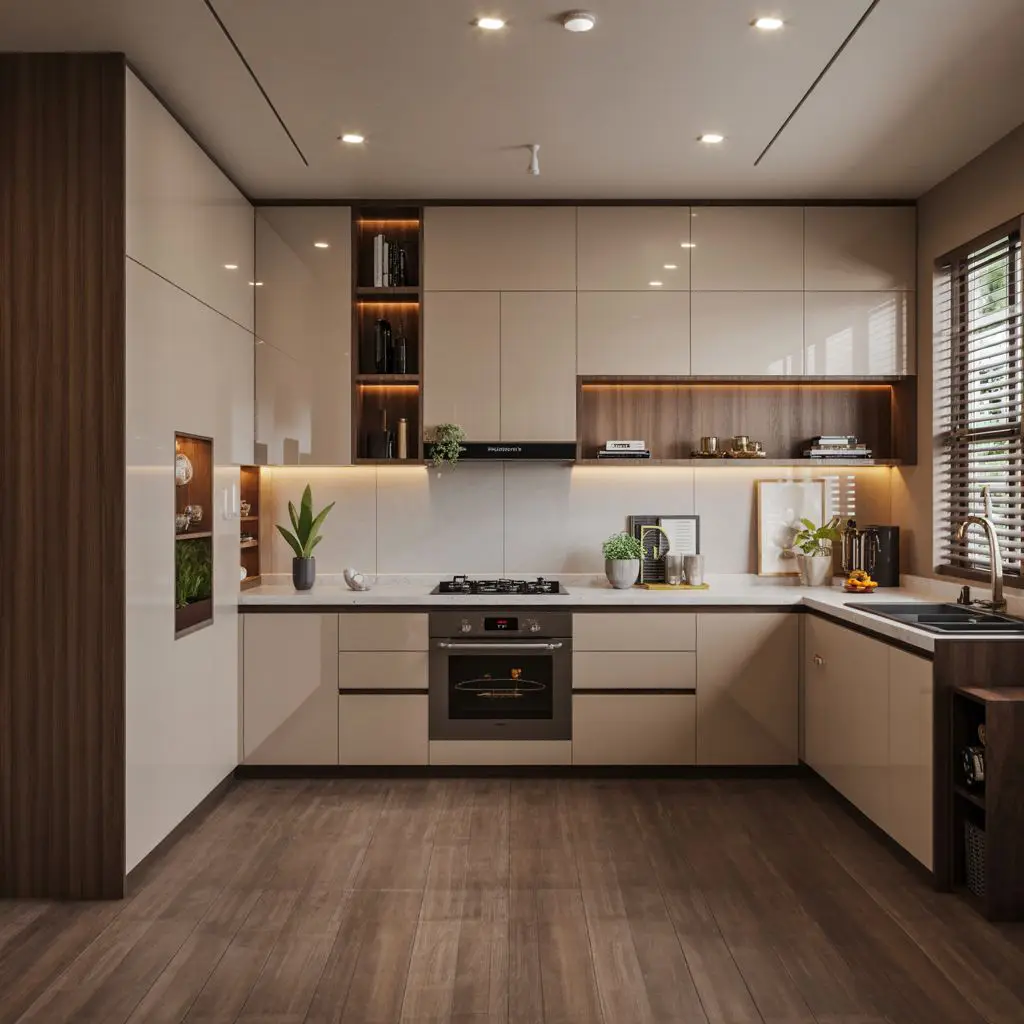
In kitchens and study areas, under-cabinet LED strips:
- Reduce shadow lines
- Add depth
- Improve functionality
- Create layered brightness
This technique works especially well in small modular kitchens.
10. Keep Lighting Minimal and Clean
Avoid:
- Oversized chandeliers in small rooms
- Too many decorative fixtures
- Cluttered wiring
- Mixed colour temperatures
Consistency and simplicity help small homes feel organized and spacious.
Best Lighting Ideas for Different Small Spaces
🛋 Living Room
- Recessed lights + floor lamp
- Mirror wall with soft LED backlight
- Accent lighting for feature wall
🛏 Bedroom
- Cove lighting
- Bedside wall-mounted lamps
- Soft ceiling lighting
🍳 Kitchen
- Under-cabinet lighting
- Bright neutral white ceiling lights
- Open shelving with LED strips
💻 Home Office
- Desk lamp with neutral light
- Avoid backlighting that causes screen glare
- Position the desk near the window
Common Lighting Mistakes That Make Homes Look Smaller
❌ Single central ceiling light
❌ Dark lampshades
❌ Poorly placed spotlights
❌ Warm yellow lighting everywhere
❌ Ignoring corner lighting
Fixing these small issues can dramatically change spatial perception.
How Lighting Works with Wall Colours
Lighting and paint go hand in hand.
- Light walls reflect more brightness
- Matte finishes absorb light softly
- Gloss finishes reflect sharply
- Dark walls require stronger layered lighting
If your goal is to make a small home look bigger, combine proper lighting with soft neutral wall shades.
Smart Lighting for Modern Apartments
Technology also plays a role.
- Dimmable LED systems
- Smart lighting controls
- Motion sensors for subtle illumination
- Adjustable colour temperature lights
Smart lighting allows you to adapt brightness depending on the time of day, enhancing flexibility in compact homes.
Frequently Asked Questions
1. How can lighting make a small home look bigger?
Proper lighting reduces shadows, brightens dark corners, and adds depth to walls and ceilings. Layered lighting techniques create visual expansion, making compact homes appear more spacious.
2. What type of lighting is best for small apartments?
Recessed lighting, flush-mount fixtures, and layered lighting combinations work best. These fixtures keep ceilings visually higher and eliminate bulky elements.
3. Does natural light make small rooms look bigger?
Yes. Natural light reflects off walls and surfaces, reducing visual boundaries and making rooms feel open and airy.
4. What lighting mistakes make small homes look smaller?
Using only one ceiling light, choosing dark lampshades, overusing warm yellow lights, and leaving corners unlit can make a small home feel cramped.
5. Is warm or cool lighting better for small spaces?
Neutral white lighting (3500K–4000K) works best because it provides brightness without creating a harsh or overly yellow effect.
6. Can mirrors and lighting together make a room look bigger?
Yes. Mirrors reflect light and double visual depth, especially when paired with LED backlighting or natural light sources.
Final Thoughts
Learning how to use lighting to make small homes look bigger is one of the smartest interior design strategies for compact living. ✨
Instead of relying solely on renovation or structural changes, strategic lighting can:
- Expand visual boundaries
- Increase brightness
- Improve comfort
- Elevate overall aesthetics
With layered lighting, proper fixture selection, and thoughtful placement, even the smallest apartment can feel open, elegant, and welcoming.