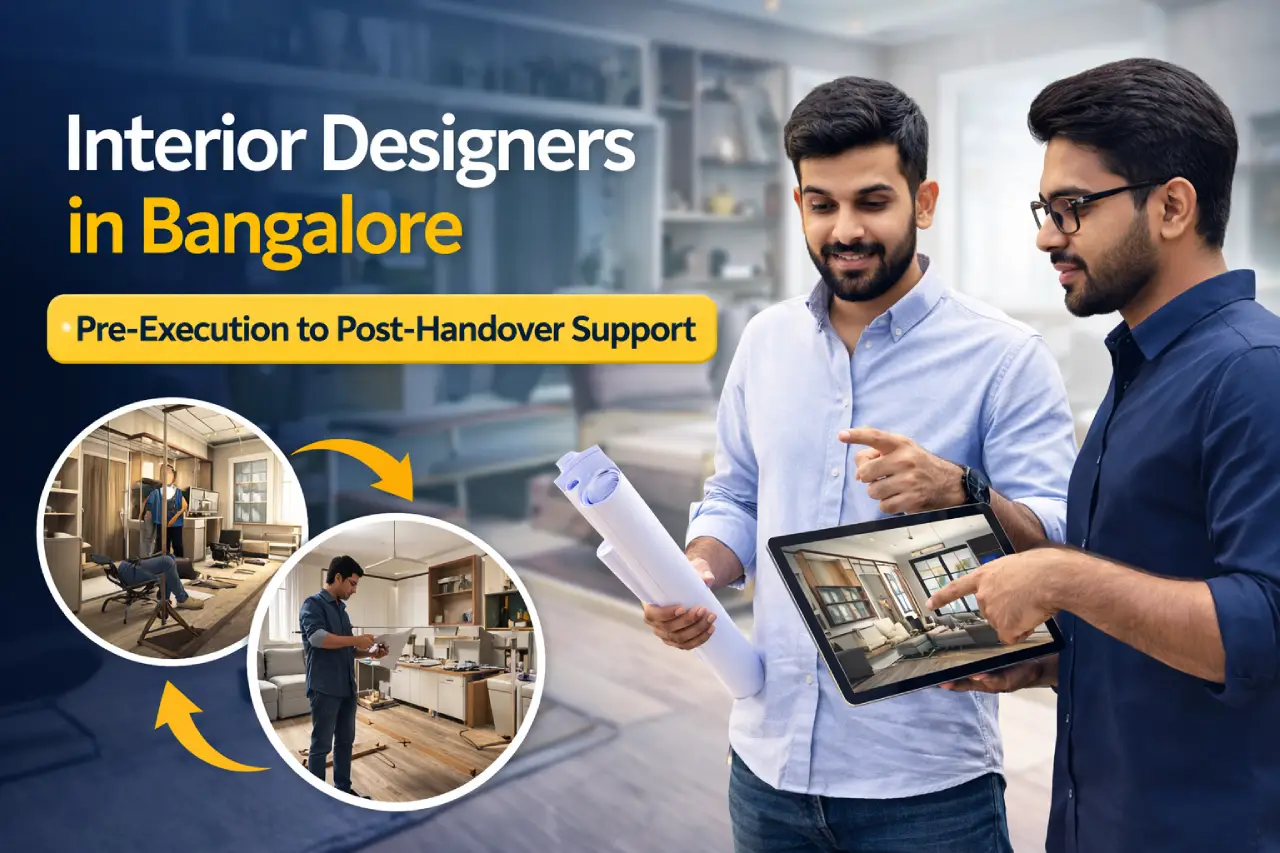
Choosing the right interior designers in Bangalore means ensuring continuous support from pre-execution planning to post-handover assistance.
For most homeowners, interior design is often seen as a one-time service, design, execution, handover, and done. But in reality, true interior quality is defined by continuous design support, starting well before execution and extending long after handover.
From planning and coordination to execution clarity and post-handover assistance, design support that never stops ensures smoother projects, fewer mistakes, and long-term satisfaction, especially for homeowners investing in permanent residential interiors.
Pre-Execution: The Foundation of a Smooth Interior Project
The success of any interior project is decided before the first piece of wood is cut.
What strong pre-execution support includes:
- Detailed layout planning
- Accurate site measurements
- Material selection guidance
- Electrical & plumbing coordination
- 3D visualization aligned with the budget
During this phase, designers identify:
- Site constraints
- Structural limitations
- Usage patterns of the family
This avoids last-minute changes, cost overruns, and execution delays.
👉 Projects with strong pre-execution planning experience fewer on-site errors and faster completion.
Design-to-Execution Coordination Matters
Many interior issues arise due to misalignment between design and execution teams.
Continuous design support ensures:
- Designs are practical, not just aesthetic
- Drawings are execution-ready
- Carpenters and vendors follow clear instructions
Instead of handing over drawings and stepping back, active designer involvement during execution ensures:
- Exact material usage
- Correct proportions
- Finish consistency
This reduces rework, wastage, and compromises.
Execution Stage: Where Real Support Is Tested
Execution is where most interior problems surface:
- On-site changes
- Vendor delays
- Material availability issues
- Alignment and finishing concerns
Design support during execution includes:
- Site visits and supervision
- Real-time design clarifications
- Vendor coordination
- Quality checks
This ensures the final output matches what was promised in the design stage, not just what was convenient on-site.
Seamless Problem-Solving During Execution
No interior project is free from challenges. The difference lies in how quickly and effectively problems are resolved.
With continuous design support:
- Design tweaks are handled without visual compromise
- Alternatives are suggested instantly if materials change
- Functionality is protected even during adjustments
Without this support, homeowners are often left making technical decisions they shouldn’t have to.
Handover Is Not the End — It’s a Transition
Many homeowners assume handover means closure. In reality, handover is just the beginning of real usage.
Strong design support continues through:
- Final walkthrough and snag list
- Finish and alignment checks
- Hardware testing
- Usage and maintenance guidance
This ensures homeowners understand:
- How to use interiors correctly
- Load limits of storage units
- Maintenance practices
Post-Handover Support: Where Long-Term Trust Is Built
Post-handover design support is often overlooked but is critical for long-term satisfaction.
It includes:
- Minor adjustments after usage begins
- Hardware tuning
- Finish touch-ups
- Guidance for future upgrades
As homes settle and homeowners adapt to spaces, small changes often become necessary. Continuous support ensures these are handled without stress.
Why This Matters for Bangalore & Indian Homes
In cities like Bangalore, interior projects face:
- Apartment-specific constraints
- High humidity levels
- Compact layouts
- Heavy daily usage
Design support that extends beyond handover is essential to:
- Address climate-related issues
- Handle wear-and-tear adjustments
- Support long-term residential living
For Indian homes, interiors are not temporary; they are long-term investments, and support should reflect that.
End-to-End Design Support = Better Interior Quality
When design support continues from pre-execution to post-handover, homeowners benefit from:
- Fewer surprises
- Better execution quality
- Reduced maintenance issues
- Higher long-term value
This approach transforms interior design from a transactional service into a long-term partnership.
Conclusion
Interior design doesn’t end with drawings, execution, or even handover. True design responsibility continues beyond completion, supporting homeowners as they live in and evolve with their spaces.
Choosing a team that offers pre-execution planning, execution-stage involvement, and post-handover support ensures not just beautiful interiors, but interiors that function, last, and adapt over time.