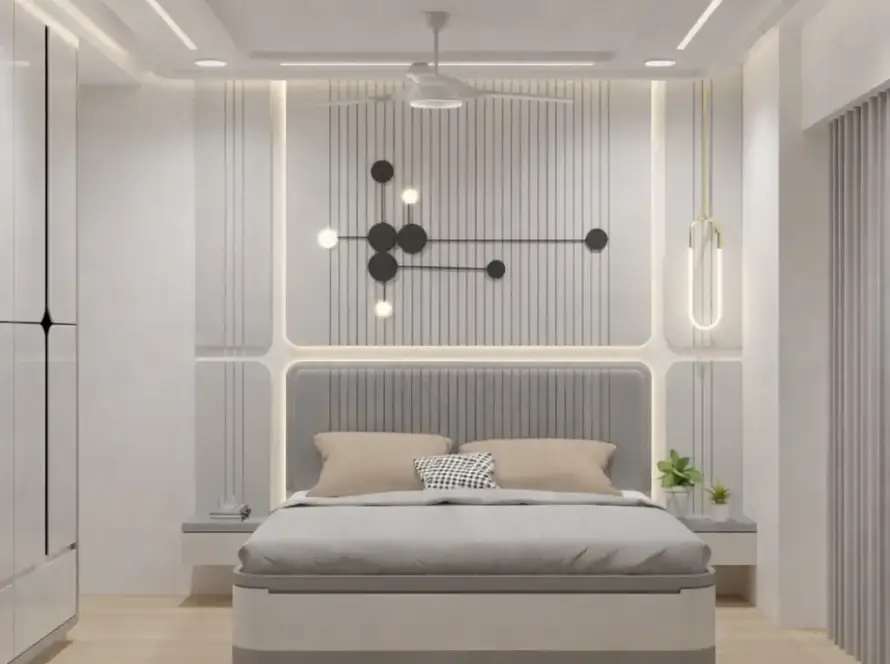
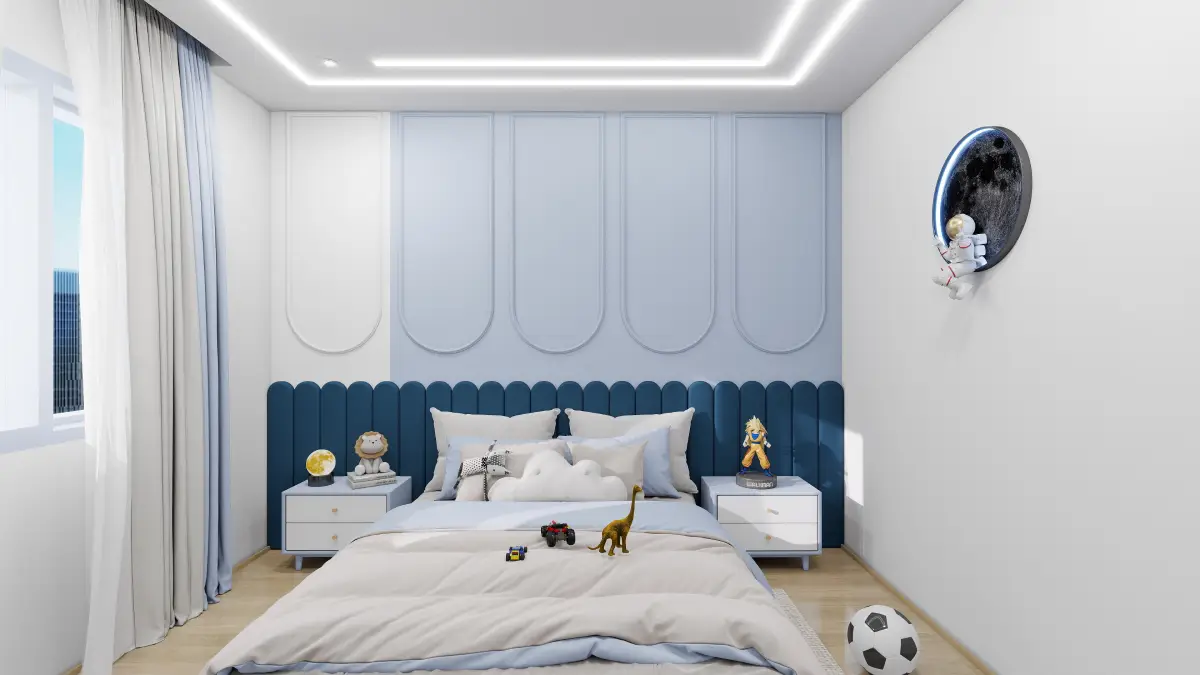
Kids bedroom interior design is not just about creating a cute space – it’s about building a room that grows with your child. It’s about creating a space that evolves with your child – from toddler tantrums to teenage independence.
The truth? A well-planned kid’s bedroom interior design should last 10+ years without feeling outdated. Instead of redesigning the room every few years, smart interior planning allows the space to grow naturally alongside your child’s needs – physically, emotionally, and functionally.
Professional interior designers don’t design for “right now.” They design for what’s coming next.
Here’s how you can do the same.
1. Start With a Timeless Foundation (Not a Theme)
One of the biggest mistakes parents make is overcommitting to a theme — race cars, princess castles, cartoon characters. While adorable at age four, they rarely survive into middle school.
Instead, create a neutral architectural base that allows personality to change over time.
Wall Colors That Grow With Your Child
Choose adaptable, calming tones like:
- Warm off-white
- Soft greige
- Muted sage green
- Dusty blue
- Light taupe
These colors feel sophisticated enough for teenagers while remaining soft enough for young children. They also promote calmness and focus – especially important once school years begin.
Smart Alternatives to Permanent Themes
Instead of installing themed wallpaper that’s hard to remove, try:
- Removable wall murals
- Framed artwork that can be swapped out
- Interchangeable wall panels
- Decals that peel off easily
This approach keeps the space feeling elevated rather than temporary.
2. Invest in Transitional Furniture That Evolves
Furniture should never “expire” in a few years. The key is scalability.
Beds That Grow With Them
Consider:
- Convertible crib-to-bed systems
- Upholstered twin beds with timeless silhouettes
- Minimalist solid wood frames
Avoid novelty shapes like race cars or princess carriages. Clean lines and quality materials will transition seamlessly into the teenage years.
Design the Study Area Early
Even if your child is still young, plan a dedicated study zone from the beginning.
Interior designers recommend:
- Adjustable-height desks
- Ergonomic chairs
- Built-in shelving
- Proper task lighting
This prevents disruptive layout changes later and encourages early independence.
3. Prioritize Smart Storage Solutions
Storage isn’t just practical – it’s foundational to good kids’ bedroom interior design.
As children grow, toys turn into books. Books turn into tech. Tech turns into personal collections.
Your storage needs to adapt.
Professional Storage Strategies
- Custom-built-in wardrobes with adjustable shelves
- Under-bed drawers
- Wall-mounted shelving systems
- Modular cabinets
Built-ins add structure and elevate the overall aesthetic. Instead of cluttered toy bins everywhere, the room feels intentional and organized.
And trust me – you’ll thank yourself later.
4. Divide the Room Into Functional Zones
Zoning is what separates professional interior design from simple decorating.
Every well-designed kids bedroom should include:
Sleep Zone
Soft textiles, calming lighting, minimal distractions.
Play Zone
Open floor space, soft rugs, movable furniture.
Study Zone
Organized desk area with focused lighting.
Creative Zone
Pinboards, display walls, and shelves for artwork.
As your child grows, the play zone naturally shrinks while study and hobby areas expand – without requiring a full redesign.
That’s smart planning.
5. Layer the Lighting (It Changes Everything)
Lighting is often overlooked in children’s rooms, but it dramatically affects mood and functionality.
A layered lighting plan includes:
- Ambient lighting: ceiling fixtures or recessed lights
- Task lighting: desk lamps or reading sconces
- Accent lighting: LED strips, nightlights, soft wall lights
This flexibility allows the room to transition smoothly from playtime to homework to bedtime.
Good lighting doesn’t just illuminate – it enhances the entire interior.
6. Refresh With Textiles Instead of Renovating
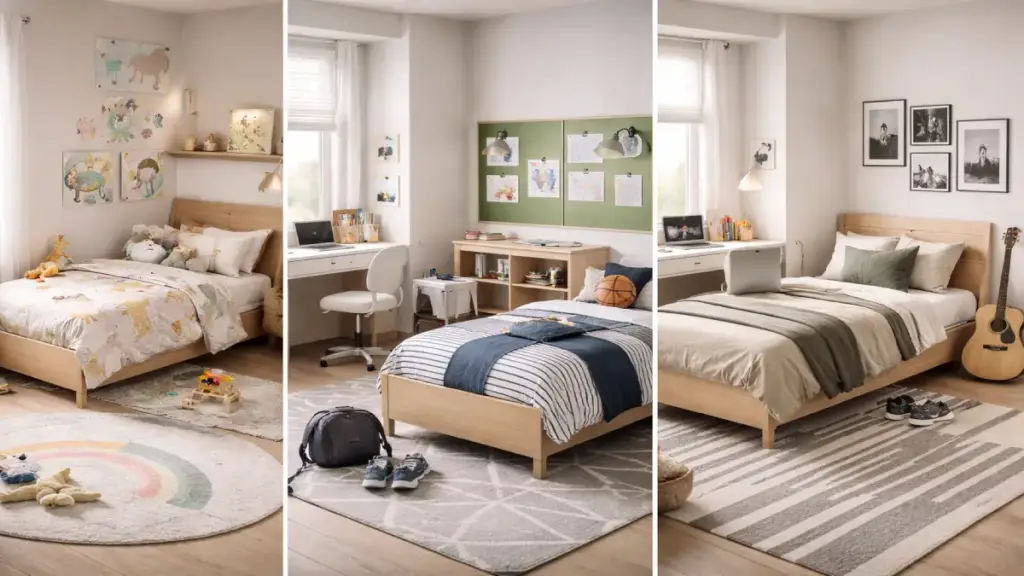
Want to update the room every few years without spending thousands?
Swap textiles and accessories.
Instead of replacing furniture, refresh:
- Bedding
- Rugs
- Curtains
- Throw pillows
- Wall art
For example:
- Animal prints for toddlers
- Graphic patterns for school-age
- Neutral textures and subtle tones for teens
This method allows the room’s personality to mature while the architectural base remains intact.
It’s strategic – and budget-friendly.
7. Plan for Technology (Even If It’s Not Needed Yet)
Today’s kids grow up with technology. Ignoring this reality leads to messy cables and awkward furniture adjustments later.
Smart design considerations include:
- Hidden cable management
- Integrated charging drawers
- Desk space for laptops
- Plenty of electrical outlets
Planning ahead keeps the space functional and organized through adolescence.
8. Encourage Independence Through Design
A well-designed room supports autonomy.
When children can access their belongings easily, they develop confidence and responsibility.
Design features that encourage independence:
- Lower shelving during early years
- Accessible wardrobe rods
- Display areas for achievements
- Personal styling zones
As they grow, allow them to participate in design decisions. It strengthens their connection to the space – and builds confidence.
Designing for Longevity: What Professionals Focus On
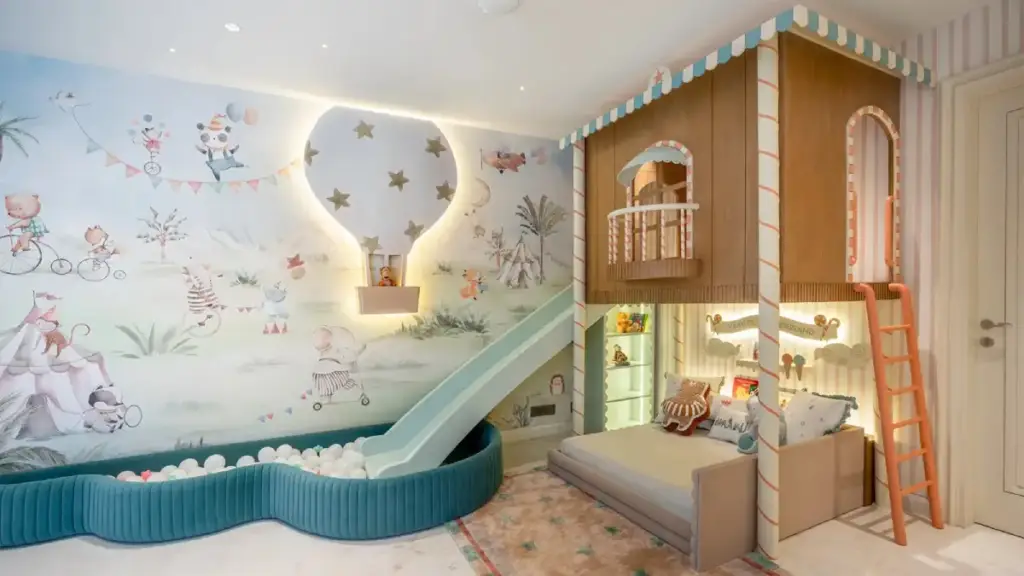
A room that truly grows with your child is built on three core principles:
- Timeless base design
- Flexible furniture systems
- Adaptable styling layers
You’re not designing for one stage. You’re designing for a decade.
And when done correctly, the result is a sophisticated, functional children’s bedroom that evolves naturally – without costly redesigns.
Frequently Asked Questions
How often should you redesign a kid’s bedroom?
Ideally, never completely. With a strong foundation and flexible elements, small updates every 3–5 years are enough.
What is the best color for a long-lasting kid’s bedroom interior design?
Neutral shades like warm white, greige, sage green, and dusty blue offer longevity and calmness.
Should you design a study area for toddlers?
Yes. Even if unused initially, planning the layout early prevents major disruptions later.
Are built-in wardrobes worth it in a child’s room?
Absolutely. Adjustable shelving ensures long-term adaptability and keeps the room organized.
How can you make a kids’ room feel mature over time?
Swap textiles, update artwork, and introduce more sophisticated lighting and accessories.
What is the biggest mistake in kid’s bedroom interior design?
Over-theming. Highly specific themes rarely age well and often require costly redesigns.
Final Thoughts
The best kid’s bedroom interior design isn’t about trends – it’s about strategy.
By focusing on timeless materials, adaptable layouts, layered lighting, and flexible decor, you create more than just a bedroom. You create a space that supports your child’s growth, independence, and creativity for years to come.
And that’s what truly smart interior design looks like.