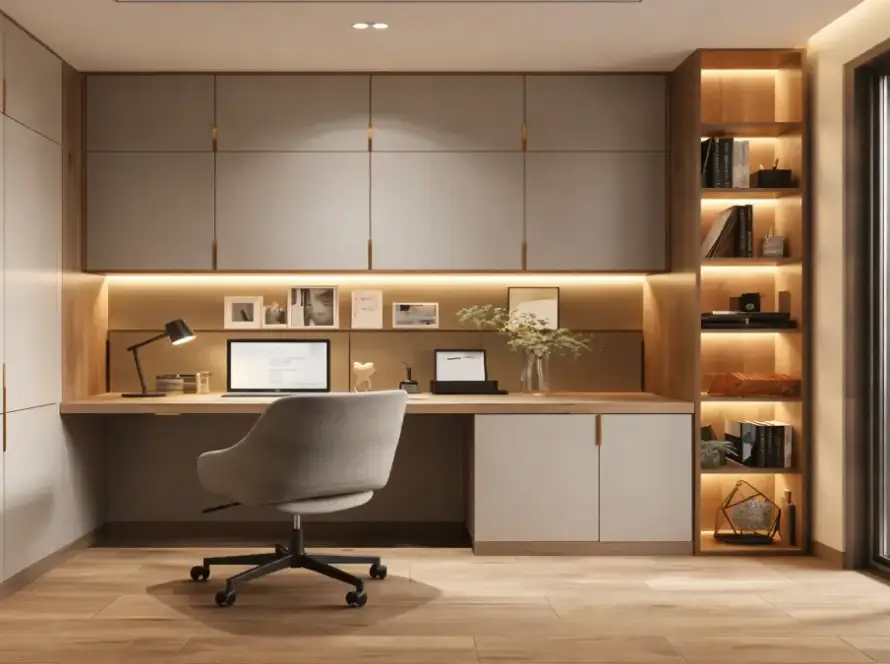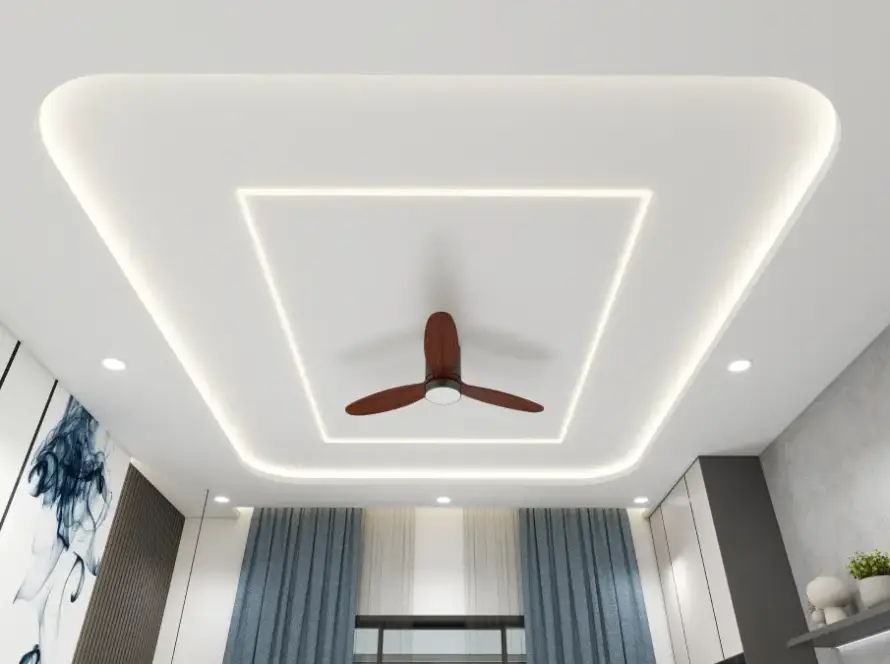
Interior design trends constantly evolve, but some styles stand out for their timeless appeal and balanced aesthetics. One such trend gaining global popularity is Japandi interior design—a harmonious fusion of Japanese minimalism and Scandinavian simplicity.
Japandi combines the elegance of Japanese design with the warmth and functionality of Scandinavian interiors. The result is a calm, clutter-free environment that focuses on natural materials, neutral color palettes, and thoughtful design.
In modern homes, Japandi interiors are becoming increasingly popular because they promote simplicity, comfort, and mindful living. Whether you are designing a living room, bedroom, or workspace, Japandi design principles can transform your home into a peaceful sanctuary.
In this guide, we explore Japandi interior design ideas, key elements, color palettes, materials, and styling tips to help you create a modern and balanced home.
What is Japandi Interior Design?
Japandi is a hybrid interior design style that merges two distinct design philosophies:
- Japanese design philosophy focuses on minimalism, nature, and simplicity.
- Scandinavian design emphasizes comfort, functionality, and clean aesthetics.
Both styles share similar values, including simplicity, natural materials, and functional design. By blending these elements, Japandi interiors create spaces that feel both warm and minimalist.
Key characteristics include:
- Neutral color palettes
- Natural materials
- Minimal furniture
- Clean architectural lines
- Functional and clutter-free layouts
Japandi design encourages homeowners to prioritize quality over quantity, creating interiors that are both stylish and calming.
Key Elements of Japandi Interior Design
Understanding the core principles of Japandi style helps create a balanced and authentic interior.
1. Neutral and Earthy Color Palette
Japandi interiors rely heavily on soft, natural colors that promote tranquility.
Popular Japandi Colors
- Beige and cream
- Soft grey
- Warm white
- Earthy browns
- Muted greens
These colors create a calming atmosphere while maintaining a sophisticated modern look.
Avoid overly bright or bold colors. Instead, focus on subtle tones that reflect nature.
2. Natural Materials and Textures
Natural materials play a central role in Japandi interiors.
Common Materials
- Wood
- Bamboo
- Linen
- Cotton
- Stone
- Ceramic
Wood is particularly important because it adds warmth and texture to minimalist spaces. Light or medium wood tones work best in Japandi interiors.
3. Minimalist Furniture Design
Furniture in Japandi interiors is simple, functional, and elegant.
Key Features
- Clean lines
- Low-profile furniture
- Simple shapes
- High-quality materials
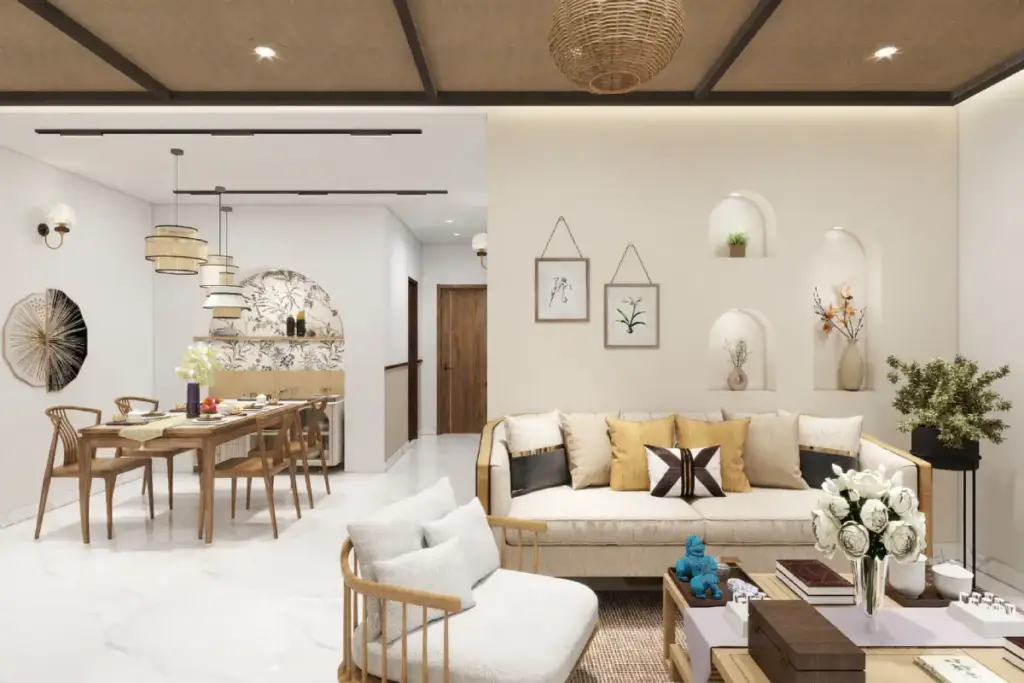
Japandi interiors avoid bulky furniture and instead focus on pieces that are both beautiful and practical.
For example, a low wooden sofa with neutral fabric upholstery perfectly reflects the Japandi aesthetic.
4. Clutter-Free Living Spaces
Minimalism is one of the most important aspects of Japandi design. Every object in the room should serve a purpose.
Tips for Maintaining Minimalism
- Avoid excessive décor
- Use hidden storage solutions
- Display only meaningful objects
A clutter-free environment helps create a peaceful and organized home.
5. Soft and Natural Lighting
Lighting is an essential part of Japandi interior design.
Lighting Ideas
- Paper lantern pendant lights
- Wooden pendant lamps
- Warm ambient lighting
- Minimal floor lamps
Soft lighting enhances the calm atmosphere and highlights natural materials within the space.
Japandi Living Room Design Ideas
The living room is one of the best spaces to showcase Japandi interiors.
Design Tips
- Use a neutral sofa with wooden legs
- Add a simple wooden coffee table
- Include indoor plants for freshness
- Choose minimal wall décor
Natural textures such as linen cushions and woven rugs can add warmth without overwhelming the space.
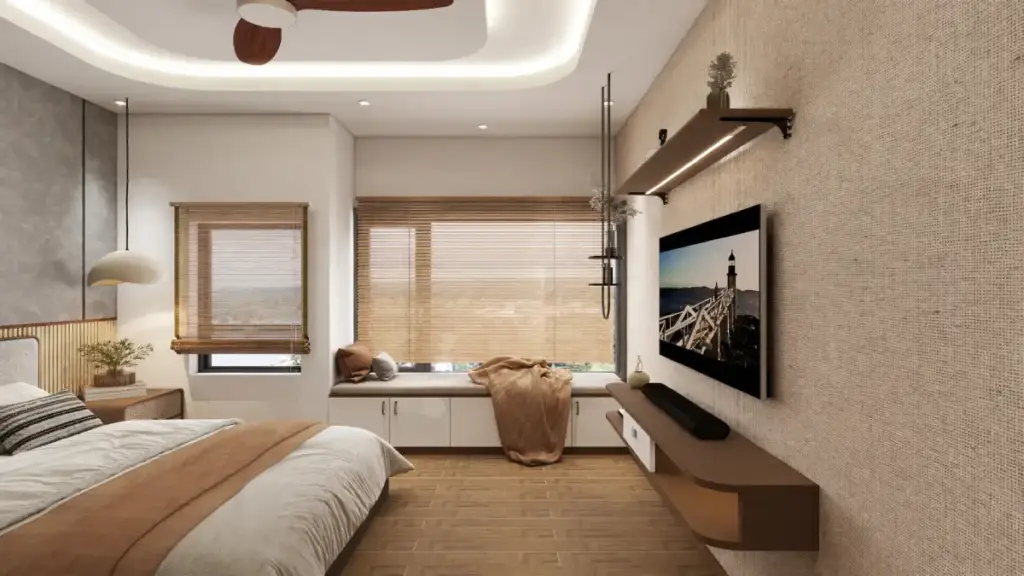
Japandi Bedroom Interior Design
Japandi bedrooms emphasize calmness and relaxation.
Key Elements
- Low platform beds
- Neutral bedding
- Minimal décor
- Soft lighting
Using natural fabrics like cotton and linen helps create a comfortable and breathable sleeping environment.
A simple wooden headboard combined with warm lighting can create a beautiful Japandi bedroom.
Japandi Kitchen Interior Design
Japandi kitchens combine Scandinavian practicality with Japanese simplicity.
Design Ideas
- Wooden cabinets with clean lines
- Neutral countertops
- Minimal hardware
- Open shelving
The focus should be on creating a functional and visually calm kitchen environment.
Japandi Interior Design Trends
As Japandi continues to gain popularity, several trends are emerging.
Current Japandi Trends
- Organic shapes in furniture
- Textured wall finishes
- Handmade ceramic décor
- Natural fiber rugs
- Indoor greenery
These elements add character to Japandi interiors while maintaining simplicity.
Japandi Interior Design for Small Homes
Japandi style works exceptionally well in compact homes and apartments.
Benefits for Small Spaces
- Minimal furniture reduces clutter
- Light color palettes make rooms feel larger
- Functional storage solutions maximize space
By focusing on simplicity and functionality, Japandi interiors create spacious and calming environments even in smaller homes.
Styling Tips for Japandi Interiors
Achieving the Japandi aesthetic requires thoughtful styling and balance.
Expert Tips
Focus on quality over quantity
Choose fewer but high-quality furniture pieces.
Balance warm and cool tones
Mix Scandinavian warmth with Japanese simplicity.
Incorporate natural elements
Plants, wood, and natural fabrics enhance authenticity.
Maintain simplicity
Avoid overcrowding the space with decorations.
FAQs: Japandi Interior Design
What is Japandi interior design?
Japandi interior design is a blend of Japanese minimalism and Scandinavian functionality.
Is Japandi style good for small homes?
Yes, Japandi works well in small homes due to its minimal and functional approach.
What materials are used in Japandi design?
Natural materials such as wood, bamboo, linen, and stone are preferred.
What makes Japandi design unique?
Japandi blends Japanese minimalism with Scandinavian comfort, creating calm and functional interiors.
Is Japandi design suitable for small homes?
Yes. Japandi works well in small spaces because of its minimalist approach and functional layouts.
Which materials are best for Japandi interiors?
Natural materials like wood, linen, bamboo, and stone are commonly used.
Are Japandi interiors expensive?
Not necessarily. The style focuses on simplicity and quality rather than excessive decoration.
Final Thoughts
Japandi interior design offers a perfect balance between minimalism and comfort. By combining Japanese simplicity with Scandinavian warmth, this style creates interiors that feel peaceful, elegant, and timeless.
With its focus on natural materials, neutral colors, and functional design, Japandi interiors promote mindful living and a clutter-free lifestyle. Whether you are redesigning a living room, bedroom, or entire home, adopting Japandi design principles can help you create a calm and harmonious environment.
If you appreciate minimal aesthetics, natural textures, and serene living spaces, Japandi interior design may be the perfect style for your home.