In today’s hybrid work culture, a well-designed workspace is no longer optional. Whether it’s a compact home office in a Bangalore apartment or a small executive cabin in a corporate setup, the wall behind your desk plays a critical role in productivity, focus, and professional perception.
Small office wall design is not about decoration – it is about creating a high-performance environment through intelligent space planning, material selection, lighting integration, and visual balance.
Let’s explore how thoughtful wall design can transform a small office into a functional and inspiring workspace.
Why Wall Design Matters in a Small Office
In compact offices, floor space is limited. Walls become the primary design surface. A poorly designed wall can make the room feel cluttered, distracting, or visually heavy. A strategically planned office wall can:
- Improve concentration
- Enhance visual comfort
- Create a professional video-call backdrop
- Maximize storage without occupying floor area
- Establish brand or personal identity
For small office interiors, the wall behind the desk becomes the focal point. It should be intentional – not accidental.
1. Architectural Back Paneling for Depth & Structure
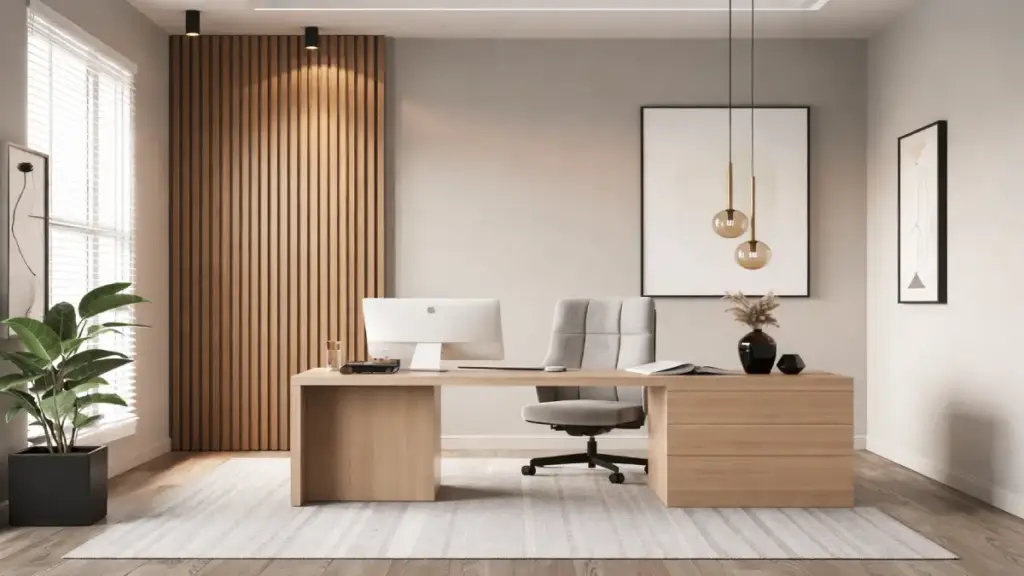
One of the most effective small office wall design solutions is installing a structured back panel behind the desk.
Material Options:
- Fluted MDF panels
- Wood veneer cladding
- Laminate-finished wall panels
- Fabric acoustic boards
- Matte textured paint finishes
Vertical paneling adds height, making compact rooms feel taller. Fabric or acoustic panels reduce echo – especially beneficial for frequent video calls.
In Bangalore apartments, where rooms often measure 8×10 or 9×10 feet, vertical wall treatment visually expands the space.
2. Integrated Wall Storage for Functional Efficiency
Clutter is the biggest productivity killer in small offices.
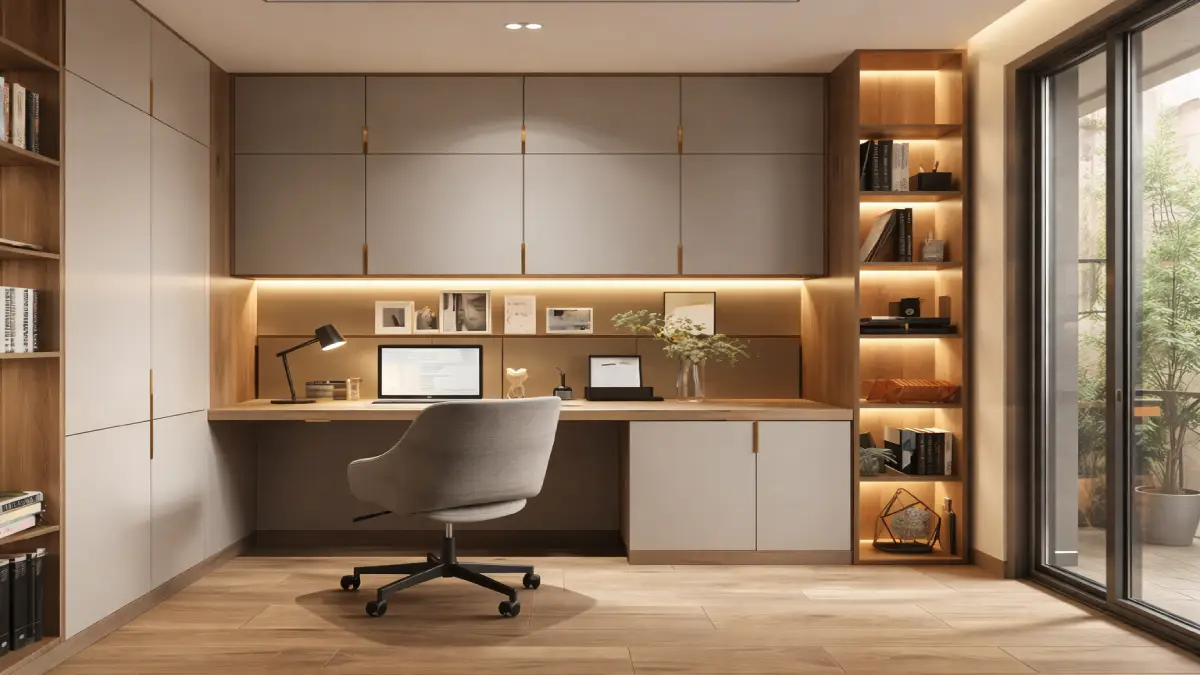
Instead of decorative shelves, focus on built-in wall storage solutions:
✔ Floating cabinets above eye level
✔ Slim closed shelving units
✔ Wall-mounted storage grids
✔ Concealed cable management panels
Storage should align proportionally with desk width to maintain balance.
Interior planning tip:
Keep upper cabinets no deeper than 12–14 inches to avoid visual heaviness.
3. Lighting-Integrated Wall Design
Lighting dramatically affects cognitive performance.
Rather than relying only on ceiling lights, integrate wall-based lighting such as:
- LED profile lighting behind panels
- Backlit vertical grooves
- Wall-mounted reading lights
- Soft indirect cove lighting
Warm white lighting (3000–3500K) enhances focus without causing eye strain.
Layered lighting improves both productivity and aesthetics.
4. Textured Finishes for Subtle Visual Interest
Flat painted walls can feel uninspiring in work environments.
Consider refined finishes like:
- Microcement texture
- Matte lime wash paint
- Subtle geometric wallpaper
- Stone veneer accent strips
Avoid busy patterns in small office wall design. Subtle textures add depth without distraction.
For corporate office cabins, neutral tones such as warm grey, taupe, or muted beige maintain professionalism.
5. Professional Background Design for Video Calls
In modern workspaces, the office wall often becomes a digital backdrop.
Design considerations:
- Keep artwork centered
- Maintain symmetrical layout
- Avoid cluttered shelves behind seating
- Choose balanced lighting
A clean vertical panel or framed minimal artworks are better than overly decorative elements.
This is especially important for startup founders, consultants, and remote professionals in Bangalore’s IT ecosystem.
6. Color Psychology for Office Wall Productivity
Color impacts mood and efficiency.
Best wall colors for small offices:
- Soft sage green (calming & focused)
- Muted blue-grey (professional & stable)
- Warm off-white (clean & bright)
- Light taupe (neutral & elegant)
Avoid:
- Bright red
- Neon tones
- Overly dark walls in small rooms
Light shades make compact offices feel spacious while maintaining visual clarity.
7. Minimal Art Placement for Focus
When incorporating decor, follow the rule of restraint.
Instead of overcrowding walls:
✔ One large framed artwork
✔ Two symmetrical frames
✔ Subtle typography art
✔ Black-and-white photography
Art should sit at eye level and align proportionally with the desk width.
Avoid busy gallery walls in small office interiors – they increase cognitive distraction.
8. Acoustic Wall Solutions for Productivity
Noise reduction is crucial in small offices.
Acoustic wall panels:
- Improve sound clarity
- Reduce echo
- Enhance concentration
- Elevate premium feel
Fabric-wrapped panels in neutral shades blend seamlessly into modern office design.
This is particularly useful in apartment workspaces near balconies or street-facing windows.
9. Space Planning & Proportion Principles
Interior design is about proportion and alignment.
When designing a small office wall:
- Keep the focal point centered to desk
- Avoid asymmetrical heavy shelving
- Maintain equal spacing between frames
- Align lighting symmetrically
Visual balance reduces mental fatigue.
Common Mistakes in Small Office Wall Design
❌ Overcrowding walls with shelves
❌ Using bold patterns in compact spaces
❌ Ignoring lighting hierarchy
❌ Placing storage too low (creating visual weight)
❌ Mixing too many materials
In small spaces, simplicity is strength.
Small Office Wall Design in Bangalore Apartments
Most urban apartments in Bangalore offer limited study room space. Smart wall planning becomes essential.
Recommended approach:
- Neutral textured paint
- Vertical fluted panel behind the desk
- Slim overhead cabinet
- Integrated LED strip lighting
- Minimal art piece
This creates a premium, professional workspace without overwhelming the room.
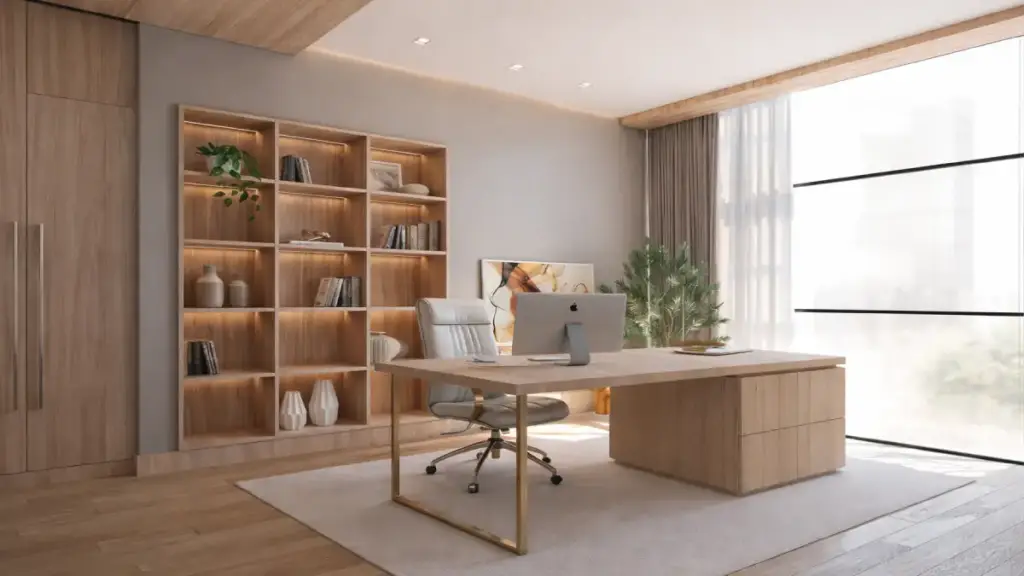
Final Thoughts: Design for Performance, Not Decoration
Small office wall decor should never be random. Every element must support:
- Focus
- Function
- Balance
- Professional presence
Thoughtful wall design transforms compact workspaces into high-efficiency zones.
At Conceptions India, we believe workspace design is not about decoration – it is about structured performance planning. When materials, lighting, and proportion align correctly, productivity naturally follows.
Because great work environments are not styled – they are engineered
FAQ
Q1: What is the best wall design for a small office?
A minimal panelled wall with integrated lighting and neutral colors works best for small offices.
Q2: Which color is best for office productivity?
Soft greens, muted blues, and warm neutrals enhance focus and reduce stress.
Q3: How can I decorate a small office wall without cluttering it?
Use vertical paneling, slim shelves, and minimal framed art instead of heavy decor.