In Indian homes, the pooja room holds deep spiritual and cultural significance. It is a dedicated space where families perform daily prayers, meditation, and rituals. A thoughtfully designed pooja room interior not only enhances the beauty of the home but also creates a calm and sacred environment for spiritual practices.
Modern homes are increasingly incorporating stylish yet functional pooja room interior designs that blend traditional elements with contemporary aesthetics. Whether you have a separate prayer room, a compact temple unit, or a small wall niche, the right design can transform the space into a serene spiritual corner.
In this guide, we explore modern pooja room interior design ideas, materials, lighting tips, and layout suggestions to help you create a peaceful and elegant home temple.
Why Pooja Room Interior Design Matters
A well-designed pooja room enhances both the spiritual and aesthetic atmosphere of a home. The design should promote tranquility, simplicity, and positive energy.
Benefits of a Thoughtfully Designed Pooja Room
Creates a peaceful environment
A dedicated prayer space helps maintain calmness and focus during prayers.
Enhances spiritual connection
Proper lighting, décor, and layout create a sacred ambiance.
Adds aesthetic value to the home
A beautifully designed temple unit can become a stunning focal point in the house.
Optimizes small spaces effectively
Even compact apartments can include a stylish pooja unit with smart design solutions.
Because of these benefits, pooja rooms are an essential part of traditional and modern Indian home interiors.
Types of Pooja Room Interior Designs
Depending on the size of your home and available space, there are several design options to consider.
1. Traditional Wooden Pooja Room Design
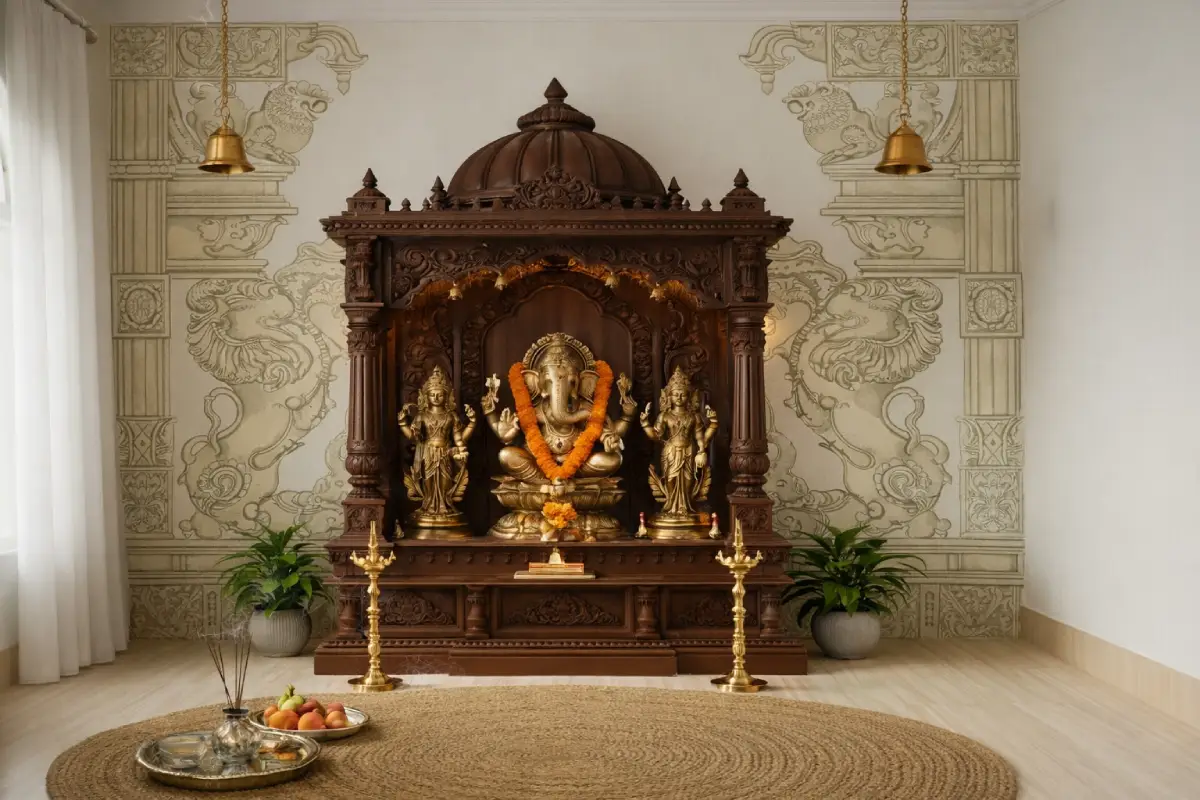
Wooden temples are one of the most popular choices for pooja rooms. Wood adds warmth, elegance, and traditional charm.
Key features
- Intricate carved wooden panels
- Decorative temple doors
- Brass bells and lamps
- Wooden shelves for idols
Wooden pooja units work beautifully in both traditional and contemporary homes.
2. Wall-Mounted Pooja Unit
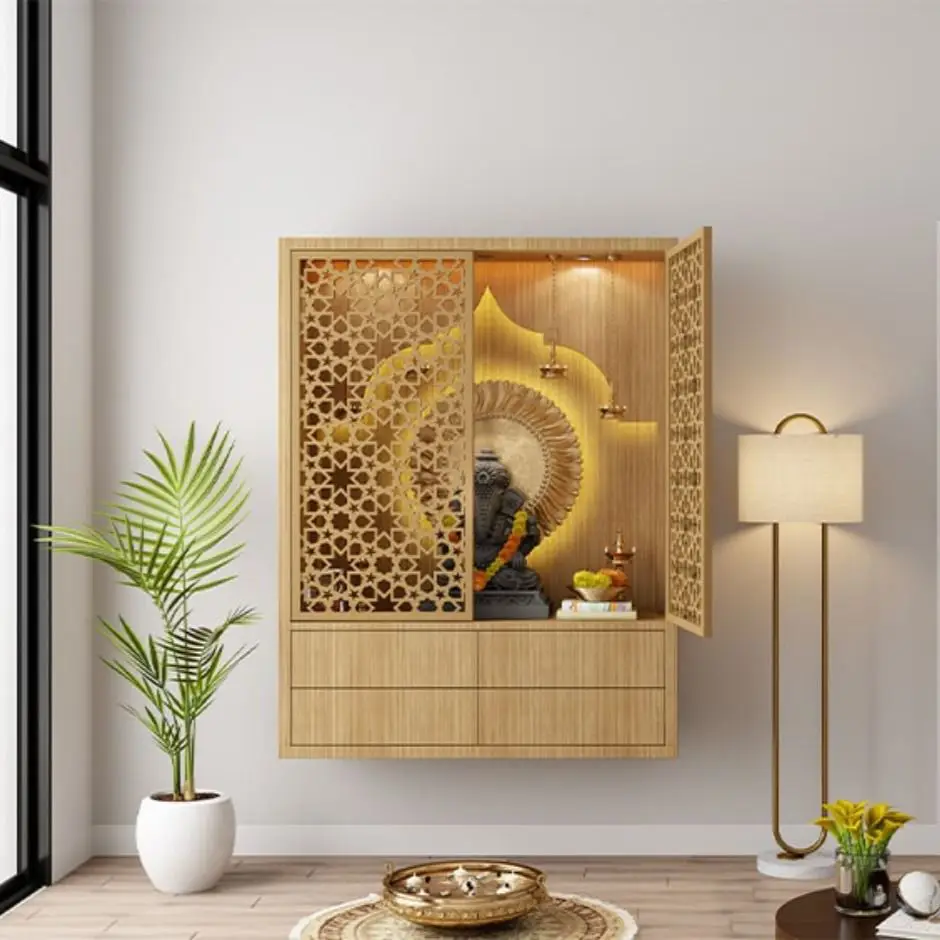
For apartments or compact homes, wall-mounted pooja units are an excellent solution. These designs save space while maintaining a sacred prayer area.
Advantages
- Ideal for small apartments
- Clean and minimal design
- Easy to install and maintain
A small wall-mounted temple with soft lighting can create a peaceful prayer corner even in limited space.
3. Glass Partition Pooja Room
Glass partitions are a modern design trend for pooja rooms. Frosted or patterned glass panels separate the prayer area without blocking natural light.
Why it works well
- Maintains openness and brightness
- Elegant contemporary look
- Suitable for modern interiors
Glass partitions are often combined with wooden or marble temple units for a balanced design.
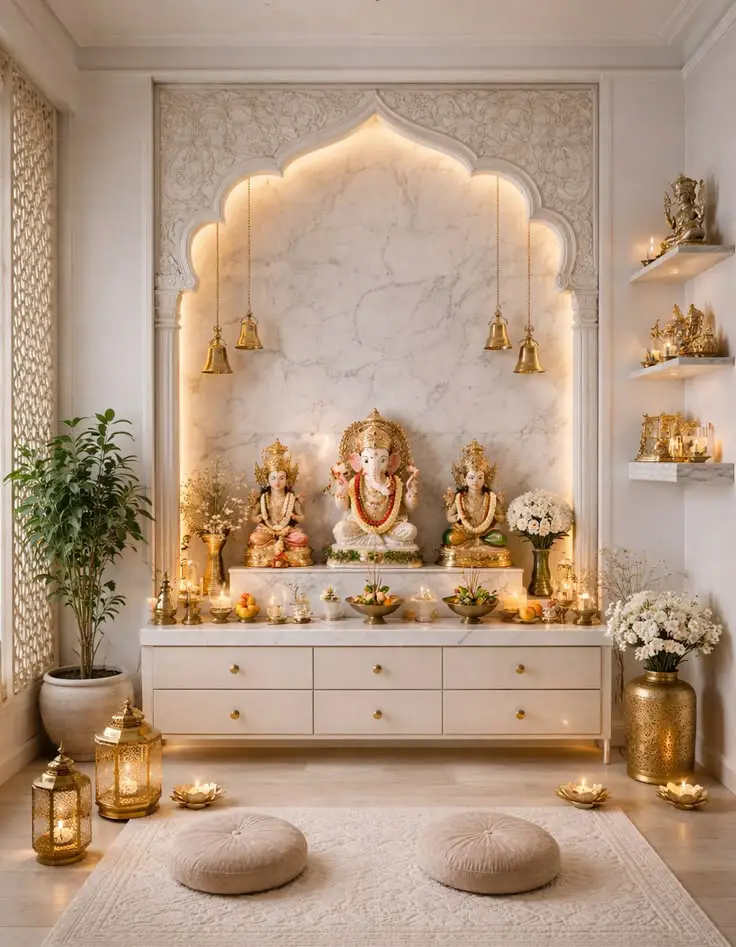
4. Marble Pooja Room Interior
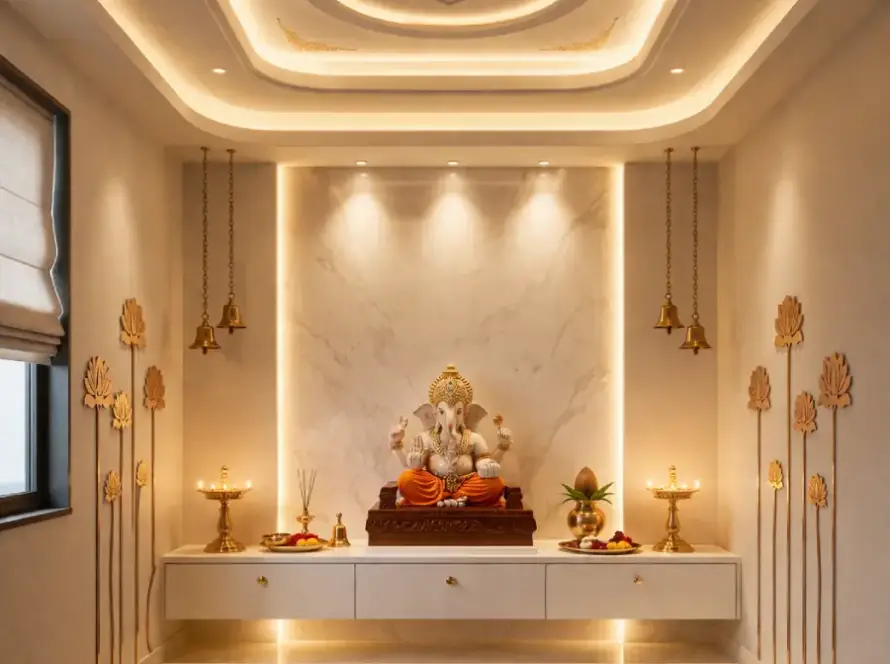
Marble is commonly used in pooja rooms because it symbolizes purity and elegance. White marble temples create a serene and luxurious prayer environment.
Popular features
- Marble temple platforms
- Intricate marble carvings
- Backlit panels behind idols
Marble pooja rooms are particularly popular in large homes and villas.
5. Pooja Room with Decorative CNC Panels
CNC-cut panels are modern decorative elements used to enhance pooja room interiors. These panels often feature traditional motifs such as lotus patterns, mandalas, or geometric designs.
Benefits
- Beautiful backlit patterns
- Lightweight decorative panels
- Customizable designs
These partitions add a modern artistic touch to the prayer area.
Lighting Ideas for Pooja Room Interiors
Lighting plays a crucial role in creating a spiritual and calming atmosphere.
LED Backlighting
Soft LED lighting behind the temple backdrop enhances the sacred ambiance.
Pendant Lamps or Diyas
Traditional hanging lamps create a classic temple feel.
Spotlights
Small spotlights can highlight idols or decorative elements.
Warm lighting is usually preferred because it creates a peaceful and welcoming atmosphere.
Pooja Room Interior Design for Small Homes
Many modern apartments have limited space, but that doesn’t mean you cannot have a beautiful prayer area.
Space-Saving Design Ideas
- Use wall niches for small temples
- Choose compact wooden temple units
- Install foldable pooja cabinets
- Use floating shelves for idols
A simple design with clean lines can make a small pooja corner look elegant and organized.
Best Materials for Pooja Room Design
Choosing the right materials ensures durability and aesthetic appeal.
Wood
Wood creates a warm and traditional atmosphere.
Marble
Marble adds elegance and purity to the prayer area.
Glass
Glass partitions provide a modern touch.
MDF or CNC Panels
These materials allow decorative designs and patterns.
Combining materials can create a unique and visually appealing pooja room interior.
Pooja Room Interior Design Trends
Interior design trends for pooja rooms are evolving to suit modern lifestyles while preserving traditional elements.
Popular Trends
- Backlit mandala panels
- Minimal wooden temple units
- Glass partition prayer rooms
- Floating pooja shelves
- Hidden storage in temple cabinets
Modern pooja room designs focus on simplicity, elegance, and spiritual comfort.
Vastu Tips for Pooja Room Design
Many homeowners follow Vastu principles while designing prayer spaces.
Common Vastu Guidelines
- Place the pooja room in the northeast direction of the house
- Avoid placing temples near bathrooms
- Use light and soothing colors
- Ensure the space is clean and clutter-free
Following these guidelines helps create a positive and harmonious environment.
Maintenance Tips for Pooja Rooms
Maintaining the cleanliness and organization of a pooja room is essential for preserving its sacred atmosphere.
Maintenance Tips
- Clean idols and shelves regularly
- Avoid overcrowding the temple space
- Use proper ventilation for incense and lamps
- Keep decorative elements simple and organized
Regular maintenance ensures the pooja room remains peaceful and inviting.
FAQs: Pooja Room Interior Design
What is the best material for pooja room interiors?
Wood and marble are the most commonly used materials due to their durability and traditional appeal.
Can small apartments have pooja rooms?
Yes. Wall-mounted units or compact temple cabinets are ideal for small homes.
Which color is best for pooja rooms?
White, cream, light yellow, and soft beige are popular because they create a calm and spiritual environment.
Is lighting important in pooja room design?
Yes. Proper lighting enhances the ambiance and highlights the temple area beautifully.
Final Thoughts
A thoughtfully designed pooja room interior can bring peace, positivity, and spiritual harmony into your home. Whether you prefer a traditional wooden temple, a marble prayer room, or a modern wall-mounted unit, the key is to create a space that feels calm and sacred.
By combining the right materials, lighting, and decorative elements, you can design a pooja room that blends spiritual significance with modern interior aesthetics.
A beautiful prayer space not only enhances your home’s interior but also provides a peaceful sanctuary for daily prayers and meditation.